



Managing a growing list of continuing education requirements often feels like a balancing act for busy architects and educators. Staying organized and making strategic choices about learning formats are key for anyone pursuing AIA credits and meeting professional standards. This practical guide spotlights the importance of structured tracking, accredited continuing education providers, and smart online engagement to simplify compliance and support long-term career growth.
Table of Contents
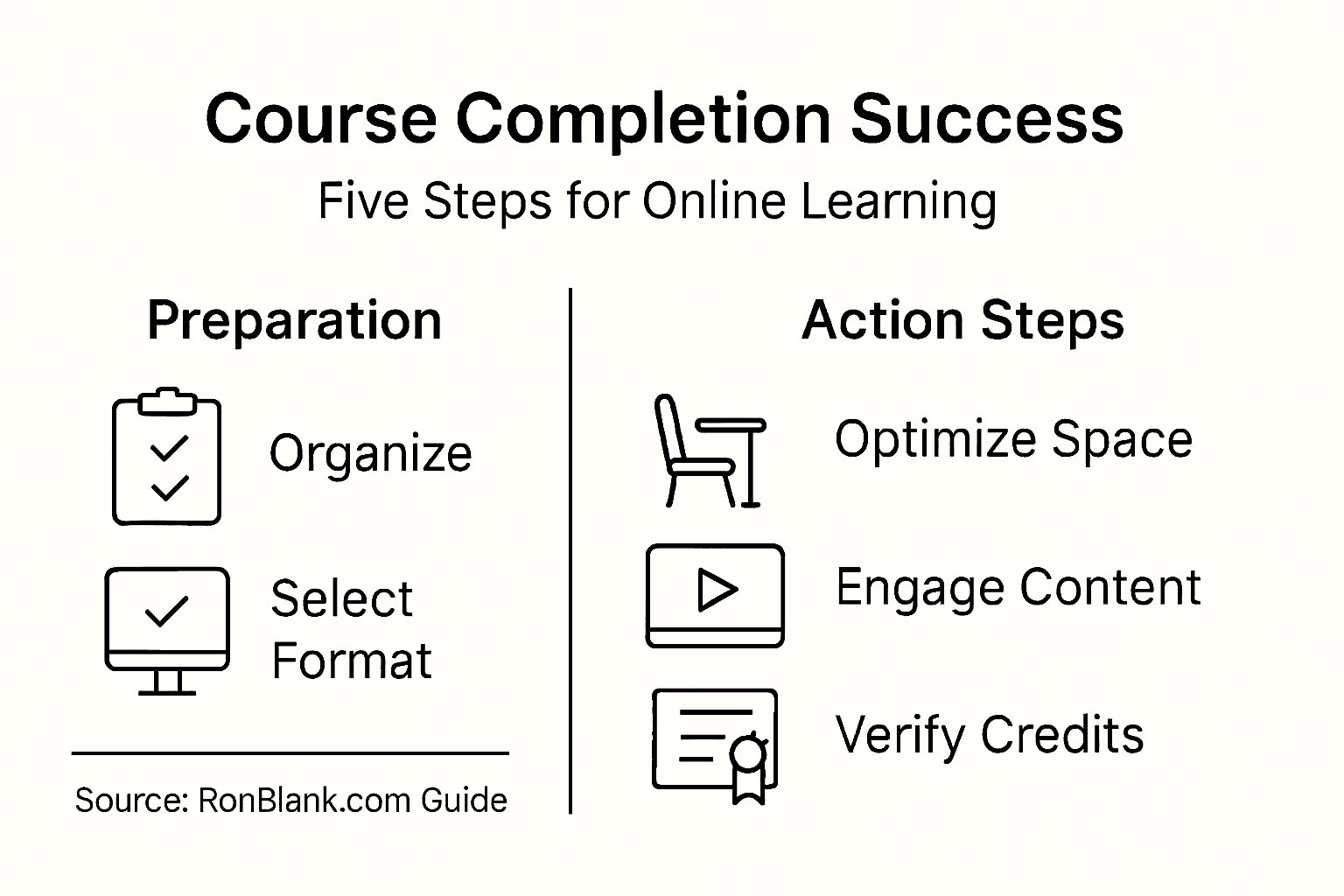
- Step 1: Organize Your Continuing Education Requirements
- Step 2: Select The Right Online Course Format
- Step 3: Set Up Your Learning Environment For Focus
- Step 4: Engage Actively With Course Content
- Step 5: Verify Course Completion And Credit Reporting
Quick Summary
| Main Insight | Detailed Explanation |
| 1. Organize Continuing Education | Create a system to track credits from various online and in-person learning formats. |
| 2. Choose Appropriate Course Format | Assess your schedule and learning style to select synchronous, asynchronous, or hybrid courses. |
| 3. Optimize Your Learning Environment | Design a distraction-free workspace that promotes focus and comfort for better learning. |
| 4. Engage with Course Content Actively | Utilize note-taking, discussions, and real-world applications to enhance learning retention. |
| 5. Verify and Report Course Completion | Keep accurate records of course completions and ensure timely submissions to maintain licensing. |
Step 1: Organize your continuing education requirements
Successfully managing your professional development starts with a strategic approach to tracking and completing continuing education credits. This step helps architects and design professionals systematically navigate their professional education standards.
To effectively organize your continuing education requirements, follow these key steps:
- Review your professional licensing board’s specific credit requirements
- Create a dedicated digital or physical tracking folder for documentation
- Identify courses that align with your professional specialty and career goals
- Track course completion dates and credit hours meticulously
Building a comprehensive tracking system involves understanding the different types of acceptable continuing education units (CEUs). Most professional organizations recognize multiple learning formats:
- Online webinars
- In-person workshops
- Conference presentations
- Professional publication contributions
- Self-study courses
Your organization’s specific continuing education standards will determine which learning formats qualify for credit.
Prioritize courses from accredited continuing education providers that offer clear documentation of completion. Many professional associations provide online portals where you can log and verify your credits automatically.

Pro tip: Schedule a quarterly review of your continuing education progress to ensure you remain compliant with professional licensing requirements.
Step 2: Select the right online course format
Choosing the most suitable online course format is crucial for architects seeking continuing education credits that align with their professional development goals and learning preferences. Understanding the various online learning approaches will help you make an informed decision.
Professional architects typically have several online course format options:
- Synchronous learning: Live online sessions with real-time instructor interaction
- Asynchronous learning: Self-paced courses completed on your own schedule
- Hybrid learning: Combination of online and in-person instruction
- Webinar-based courses: Structured online presentations with potential interaction
When evaluating course formats, consider these critical factors:
- Your current professional workload
- Personal learning style and preferences
- Credit requirements for your specific licensing board
- Time availability for course completion
- Technological comfort level
Selecting the right online course format can significantly impact your learning effectiveness and professional development.
Many professional organizations now offer flexible online education models that cater to different learning needs. Look for courses that provide comprehensive documentation, interactive elements, and clear pathways to earning continuing education credits.
Here is a comparison of common online course formats for continuing education:
| Course Format | Interaction Level | Flexibility | Typical Technology Needs |
| Synchronous Online | High (live sessions) | Scheduled dates/times | Reliable video conferencing |
| Asynchronous Online | Low (self-paced) | Complete self-paced | On-demand access platform |
| Hybrid (Blended) | Moderate (mixed) | Varies by course | Both online and in-person tech |
| Webinar-Based | Moderate (Q&A) | Fixed presentation | Webinar software or browser |
Pro tip: Always download and save course completion certificates immediately after finishing an online course to maintain accurate professional development records.
Step 3: Set up your learning environment for focus
Creating an optimal learning space is crucial for maximizing your continuing education effectiveness. Designing a strategic study environment can dramatically improve your concentration and learning outcomes.
To establish a productive learning environment, consider these essential elements:
- Dedicated workspace: Select a quiet area exclusively for learning
- Ergonomic setup: Invest in comfortable, supportive furniture
- Minimal distractions: Remove potential interruption sources
- Technology preparedness: Ensure reliable internet and functional devices
Key considerations for your learning space include:
- Natural lighting placement
- Noise management strategies
- Comfortable temperature control
- Organized, clutter-free workspace
- Necessary learning tools and resources within reach
A well-designed learning environment supports sustained mental focus and improves information retention.
Study space optimization strategies suggest incorporating elements that promote concentration. This might include noise-canceling headphones, strategic furniture positioning, and intentional visual design that minimizes cognitive overload.

Pro tip: Test and adjust your learning environment periodically, recognizing that your optimal study setup may evolve with changing professional demands.
Step 4: Engage actively with course content
Successful online learning requires more than passive consumption of information. Active learning strategies are essential for transforming continuing education credits into meaningful professional development.
Key strategies for active course engagement include:
- Take detailed notes: Capture key concepts and insights
- Ask questions: Interact with course materials critically
- Participate in discussions: Connect with fellow professionals
- Apply concepts: Relate learning to real-world architectural projects
To maximize your learning potential, focus on these engagement techniques:
- Preview course materials before each session
- Create summary documents after completing modules
- Seek practical applications for new knowledge
- Connect with other course participants
- Reflect on how each lesson impacts your professional practice
Meaningful engagement transforms online courses from passive information delivery to interactive learning experiences.
Online learning engagement methods suggest using multimedia resources, collaborative assignments, and personal reflection to enhance comprehension and retention.Pro tip: Schedule dedicated reflection time after each course module to solidify your understanding and identify practical applications for your architectural practice.
Step 5: Verify course completion and credit reporting
Course completion is more than simply finishing an online module. Continuing education credit tracking requires careful documentation and proactive verification to ensure your professional licensing requirements are met.
Key steps for verifying and reporting your continuing education credits include:
- Save completion certificates: Download and store immediately after course finish
- Check credit requirements: Confirm specific licensing board regulations
- Document course details: Record course name, date, and credit hours
- Track submission deadlines: Note reporting timelines for your profession
Follow these systematic verification procedures:
- Review course completion documentation
- Verify credit hours match licensing requirements
- Submit documentation to your professional licensing board
- Maintain digital and physical copies of certificates
- Confirm receipt of credit reporting
Accurate record keeping protects your professional credentials and ensures uninterrupted licensing status.
Continuing education reporting guidelines emphasize the importance of timely and precise documentation. Professional architects should anticipate potential audits by maintaining comprehensive, organized records of their ongoing education.The following table summarizes best practices for maintaining verified continuing education records:
| Practice | Why It Matters | Example Implementation |
| Immediate Certificate Saving | Prevents loss of proof | Download after each course completion |
| Organized Digital Storage | Eases access/audit processes | Use labeled folders by year/type |
| Regular Progress Reviews | Flags missing credits early | Schedule quarterly self-audits |
| Redundant Backups | Protects against data loss | Back up to cloud and external drive |
| Confirm Submission | Ensures compliance documentation | Get formal acknowledgment from board |
Pro tip: Create a dedicated digital folder for continuing education documents, and set calendar reminders for reporting deadlines to prevent last-minute compliance challenges.
Master Your Continuing Education Journey with RonBlank.com
The challenge of staying organized and focused while completing continuing education courses as an architect, engineer, or designer is real. From tracking credits and verifying course completion to choosing the right online format, professionals face hurdles that can cause stress and uncertainty. If you want to overcome these obstacles with confidence RonBlank.com offers accredited continuing education courses tailored to your busy schedule and professional goals. Our courses are registered with the American Institute of Architects and delivered through flexible online formats including webinars and podcasts allowing you to engage deeply with content and maintain thorough records.


Take control of your professional development today. Explore comprehensive course options at RonBlank.com to ensure your continuing education credits are earned efficiently and accurately. Don’t let confusion around credit tracking and course documentation hold back your career progress. Visit RonBlank.com now and turn your learning challenges into career-building opportunities.
Frequently Asked Questions
How can I effectively track my online course credits?
To effectively track your online course credits, create a dedicated folder—either digital or physical—for all documentation. Regularly log course completion dates and credit hours to maintain accurate records.
What steps should I take to choose the right AIA online course format?
Start by evaluating your learning preferences and professional commitments. Consider factors like your availability, comfort with technology, and learning style to select a course format that best fits your needs, such as synchronous, asynchronous, or hybrid learning.
How can I create an optimal learning environment for AIA online courses?
Establish a dedicated workspace that is quiet and free from distractions. Ensure you have ergonomic furniture and reliable technology, so you can focus and effectively engage with the course materials.
What strategies can I use to engage actively with the AIA course content?
Utilize active learning techniques such as taking detailed notes, asking questions, and participating in discussions. Relate concepts to your real-world architectural projects to enhance retention and practical application.
How do I verify and report my continuing education course credits?
Immediately save course completion certificates and document course details such as name, date, and credit hours. Regularly check your licensing board’s requirements and track deadlines for submission to ensure compliance.