



TL;DR:
- Staying current on codes is essential for project compliance, safety, and legal protection, especially given frequent updates.
- Professionals must integrate ongoing education through seminars, industry publications, and team communication to prevent costly mistakes and delays.
- Failing to do so risks rework, project delays, liability claims, and damage to reputation, emphasizing the importance of continuous code literacy.
Staying updated on codes means continuously learning and applying the latest regulatory standards to keep your projects compliant, safe, and legally defensible. For architects, engineers, and contractors, this practice is not optional. The National Electrical Code (NEC), the International Building Code (IBC), and NFPA standards are revised on regular cycles, and most states require electrical professionals to complete 12 to 24 hours of continuing education per renewal cycle with significant focus on code changes. Missing those updates does not just create paperwork problems. It puts projects, clients, and professional licenses at risk.
Why stay updated on codes and what’s at stake for your projects
Code updates are direct responses to real-world failures, safety innovations, and professional feedback. The NEC and NFPA standards are shaped by thousands of volunteers who participate in a continuous refinement process, incorporating lessons from fires, structural failures, and advances in materials science. That means every new edition carries practical weight, not just regulatory formality.
When a code revision expands grounding requirements for photovoltaic systems or changes egress specifications under the IBC, your design documentation must reflect those changes before a project goes to permit. Inspectors check against the adopted edition in their jurisdiction, not the edition you learned in school or used on your last project. Working from an outdated version is the professional equivalent of navigating with a map from five years ago.
The compliance benefits are concrete. Projects designed to current standards move through plan review and inspection faster, face fewer correction notices, and carry lower liability exposure for the design team. Consider what happened across multiple jurisdictions when the 2020 NEC introduced new requirements for ground fault circuit interrupter (GFCI) protection in garages and outdoor areas. Contractors who had already absorbed those changes submitted compliant drawings on the first pass. Those who had not faced costly redesigns and schedule delays.
“The codes keep changing, and so should we. Treating a code update as a one-time event rather than an ongoing professional obligation is the fastest way to fall behind.” — HFM Magazine
Here is what current code knowledge directly protects:
- Project approval speed. Drawings aligned with the adopted code clear plan review with fewer correction cycles.
- Client safety. Updated fire, electrical, and structural standards reflect the latest understanding of how buildings fail.
- Professional liability. Errors of omission tied to outdated code knowledge are a documented source of design professional claims.
- Contractor relationships. When your specifications reference current standards, subcontractors can bid and build without ambiguity.
What are the common challenges professionals face in staying current?
The single biggest obstacle is fragmentation. Building codes in the United States are not uniformly adopted. The IBC, NEC, and NFPA 101 are published by national bodies, but each state, county, and municipality decides when and whether to adopt a new edition, and often with local amendments. Tracking the Authority Having Jurisdiction (AHJ) legislative calendar is therefore as important as reading the national publication itself. A project in one county may be governed by the 2021 IBC while a project thirty miles away still operates under the 2018 edition.

The volume and pace of change compound the problem. The NEC alone is updated every three years, and each cycle introduces hundreds of revisions across dozens of articles. Professionals working across multiple disciplines face overlapping update cycles from different code bodies simultaneously. Add ASHRAE 90.1 energy standards, ADA accessibility requirements, and state-specific fire codes, and the information load becomes genuinely difficult to manage without a system.
Here are the most common mistakes professionals make when trying to stay current:
- Treating updates as isolated reading tasks. Downloading a new code edition and skimming the changes section is not the same as understanding how those changes affect your specific project types.
- Assuming national publication equals local adoption. The lag between when a code is published and when your AHJ enforces it can be years. Acting on a new edition before local adoption can create compliance conflicts.
- Relying on a single source. No single newsletter or trade publication covers every relevant change across all disciplines. Professionals who rely on one channel miss updates that fall outside its focus.
- Skipping team communication. One person on a project team attending a code seminar and not sharing what they learned creates uneven knowledge across the team, which leads to coordination errors in documents.
Pro Tip: Set a calendar reminder at the start of each year to check your AHJ’s adopted code editions. A ten-minute check at the beginning of a project can prevent a costly correction mid-construction.
How can professionals integrate code updates into daily workflows?
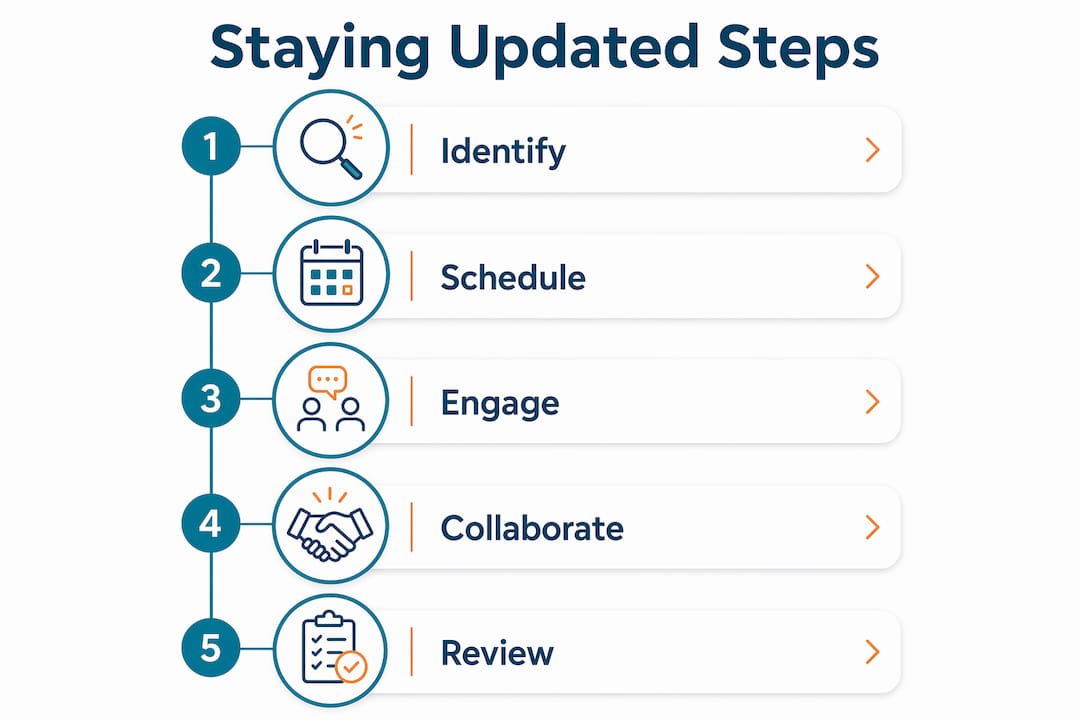
The professionals who stay ahead of code changes treat the process as an operational habit, not a reactive scramble. Building workflows around release calendars and documentation review prevents the kind of last-minute compliance panic that disrupts live projects and strains client relationships.


The most reliable approach combines multiple channels into a consistent routine. Trade associations and industry publications such as Electrical Contractor Magazine, EC&M (Electrical Construction and Maintenance), and NFPA’s own update newsletters are primary sources that simplify complex changes into practical summaries. Subscribing to these and reading them consistently takes less time than recovering from a failed inspection.
Attending code-change seminars is the most underused strategy in the profession. Seminars led by code-making panel members explain the reasoning behind new requirements, not just the text of the change. Understanding why a requirement was added helps you apply it correctly in edge cases that the written code does not explicitly address. That depth of understanding is what separates professionals who comply with codes from those who truly command them.
Here is a practical comparison of the most common methods for staying informed:
| Method | Best for | Limitation |
|---|---|---|
| Trade publications (EC&M, Electrical Contractor) | Ongoing awareness of changes | May not cover all disciplines equally |
| Code-change seminars by panel members | Deep understanding of intent | Requires time investment and scheduling |
| AHJ legislative calendar tracking | Local adoption timing | Requires proactive research per jurisdiction |
| Digital code reference tools (UpCodes, ICC Digital Codes) | In-project lookup and verification | Does not replace structured learning |
| Continuing education courses (AIA-registered) | License renewal and structured updates | Varies in depth by provider |
Within your project team, create a shared protocol for disseminating code updates. Assign one team member per discipline to monitor relevant code bodies and brief the group at project kickoff and at key design milestones. This turns individual knowledge into organizational capability.
Pro Tip: When a new code edition is published, do not just read the summary of changes. Pull up a recent project drawing and walk through it against the new requirements. That exercise reveals gaps faster than any abstract reading.
What happens when professionals fail to keep up with code changes?
The consequences of outdated code knowledge are financial, operational, and reputational. Ignoring proactive code updating leads to higher risk of project delays, compliance failures, and increased operational costs that compound quickly once a project is in construction.
Failed inspections are the most visible consequence. When an inspector cites a violation tied to a code change that took effect two years ago, the correction is not just a drawing revision. It may require demolition and reconstruction of completed work, triggering change orders, schedule extensions, and difficult conversations with clients. Inspectors interpret codes based on the adopted edition and their own field experience, and those interpretations are not always predictable. Professionals who engage with inspectors and understand current code intent navigate those conversations far more effectively.
The financial picture is stark:
- Rework costs. Construction rework caused by non-compliant designs can consume a significant portion of project contingency budgets.
- Schedule overruns. Correction cycles add weeks to permit timelines and can push project completion past contractual deadlines.
- Professional liability claims. Design errors tied to outdated code knowledge are a recognized category of errors and omissions claims.
- Reputation damage. Clients and contractors remember which firms deliver clean, compliant documents and which ones generate field problems.
| Consequence | Operational impact |
|---|---|
| Failed inspection | Rework, schedule delay, added cost |
| Non-compliant permit submission | Extended plan review, correction cycles |
| Outdated specifications | Contractor confusion, bid errors, substitution requests |
| Liability exposure | E&O claims, increased insurance premiums |
The reputational dimension is the one professionals underestimate most. A single high-profile compliance failure on a public project can follow a firm for years. Clients talk to each other, and contractor experience with compliant documentation is a real factor in how subcontractors price and prioritize work for different design teams.
Key takeaways
Staying current on building codes is a professional obligation that directly protects project outcomes, client safety, and your firm’s reputation in the market.
| Point | Details |
|---|---|
| Code updates reflect real failures | NEC, IBC, and NFPA revisions respond to tragedies, technology changes, and field feedback. |
| AHJ adoption timing is critical | National publication and local enforcement are not the same date; track your jurisdiction’s calendar. |
| Seminars outperform solo reading | Code-change seminars led by panel members deliver intent and context that written text alone cannot. |
| Outdated knowledge has direct costs | Non-compliant designs cause rework, schedule delays, liability claims, and reputation damage. |
| Operational habits beat reactive scrambles | Building release calendars and team briefings into your workflow prevents last-minute compliance failures. |
How Ronblank helps you stay ahead of every code cycle
Ronblank develops AIA-registered continuing education courses specifically designed for architects, engineers, interior designers, and contractors who need structured, credible ways to stay current on building codes and industry standards. The courses are delivered as online modules, webinars, podcasts, and face-to-face sessions, so you can fit professional development into your schedule without disrupting project work.


Whether you need to satisfy your state’s continuing education requirements or want to go deeper on a specific code area, Ronblank’s course catalog covers the topics that matter most to AEC professionals in 2026. Explore the full range of continuing education resources at Ronblank and find the format that works for your team. Staying compliant and staying sharp are not separate goals. The right education program makes both happen at once.
FAQ
Why do building codes change so frequently?
Building codes change in response to real-world events, new safety technologies, and feedback from field professionals. The NEC, IBC, and NFPA standards are revised on regular cycles, typically every three years, to incorporate lessons from failures and advances in construction practice.
How do I know which code edition applies to my project?
The edition enforced on your project is determined by the Authority Having Jurisdiction (AHJ), not the national publication date. Check your local building department’s adopted code list at the start of every project, since adoption timelines vary significantly by state and municipality.
What is the fastest way to get up to speed on a new code edition?
Attending a code-change seminar led by a panel member is the most efficient method. These seminars explain the intent behind new requirements, which helps you apply them correctly in situations the written text does not explicitly cover.
How many continuing education hours do electrical professionals typically need?
Most states require electrical professionals to complete 12 to 24 hours of continuing education per license renewal cycle, with a significant portion focused on NEC code changes. Requirements vary by state, so verify your specific jurisdiction’s rules with your licensing board.
What are the real costs of working from an outdated code?
Working from an outdated code edition risks failed inspections, costly construction rework, extended permit timelines, and professional liability exposure. Beyond the direct financial impact, repeated compliance failures damage client relationships and your firm’s reputation in the market.