
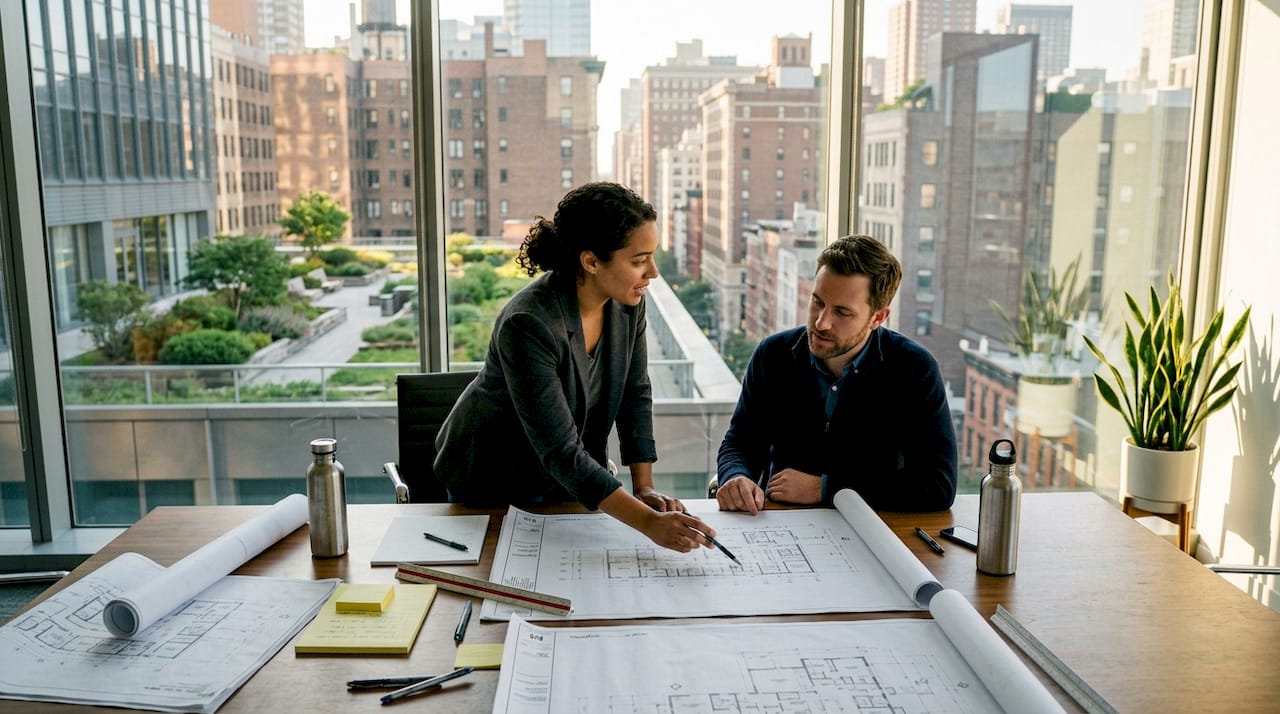
Architects and designers today face a critical challenge: distinguishing truly effective green design from projects that simply check boxes. With evolving standards and competing certification frameworks, identifying exemplary sustainable work requires clear, measurable criteria. The AIA Framework for Design Excellence provides exactly that, offering 10 rigorous measures spanning integration, ecosystems, resources, and community impact. Below, we examine seven award-winning projects that demonstrate these principles in action, offering you concrete strategies and performance benchmarks to inform your next sustainable design.
Table of Contents
- Green design criteria every project should meet
- AIA Global Campus for Architecture & Design: Performance through retrofit
- Center for Sustainable Landscapes: Multi-certification and ecological integration
- Slate School: Passive House standards for education
- Del Ray Passive House: Advanced envelope and resilience
- Hayward Library: Community-driven zero energy public space
- Bush School Upper School: Passive House for the Pacific Northwest
- Comparing the examples: What strategies fit your project?
- Advance your sustainable design expertise
- Frequently asked questions
Key Takeaways
| Point | Details |
|---|---|
| Framework-driven selection | The AIA Framework for Design Excellence gives you a reliable checklist for prioritizing green impact in every project. |
| Retrofit potential | Adaptive reuse delivers substantial embodied carbon savings, often outperforming new builds in sustainability. |
| Net-zero and Passive House | Net-zero energy and Passive House projects are becoming mainstream and demonstrate proven results in multiple typologies. |
| Community and ecosystem integration | Most impactful projects weave community input and ecological benefits into their design from the start. |
| Tailor to context | Strategies should be adapted to climate, site, and program needs, as shown by award-winning case studies. |
Green design criteria every project should meet
Before evaluating specific projects, you need a consistent framework. The AIA Framework’s 10 measures are universally applicable to all green projects seeking excellence. These criteria assess design integration, equitable communities, ecological health, water stewardship, economy and energy, well-being, resources, change readiness, and discovery.
Sustainable design minimizes environmental harm through efficiency and responsible resource use. Regenerative design goes further, actively restoring ecosystems and improving site conditions beyond their original state. Net-zero design balances annual energy consumption with renewable generation, eliminating operational carbon emissions.
When assessing any project, examine both operational and embodied carbon impacts. Operational carbon comes from building use over time, while embodied carbon results from material extraction, manufacturing, and construction. Many designers focus solely on operational metrics, missing the substantial carbon footprint locked into materials and assemblies.
Pro Tip: Always request Environmental Product Declarations (EPDs) from manufacturers to quantify embodied carbon in your material selections. This data transforms vague sustainability claims into actionable specifications.
“The best green building is the one already built. Adaptive reuse and retrofit should be your first consideration, not your fallback option.”
AIA Global Campus for Architecture & Design: Performance through retrofit
Retrofitting existing buildings often delivers greater carbon savings than new construction, and the GCAD achieved carbon neutrality while demonstrating this principle at scale. Located in Washington, DC, this project transformed a 1970s office building into AIA’s high-performance headquarters.
The design team implemented a comprehensive decarbonization strategy:
- Complete fossil fuel removal, replacing gas systems with all-electric heat pumps
- 500 kW rooftop photovoltaic array generating renewable energy onsite
- R-40 roof insulation upgrade, dramatically reducing thermal losses
- Energy Use Intensity (EUI) dropped to the low 40s kBtu/ft²/year
- 55% embodied carbon reduction through material reuse and low-carbon selections
This project proves that existing building stock represents our greatest opportunity for immediate climate impact. Rather than demolishing and rebuilding, the team preserved the structure and envelope, avoiding massive embodied carbon emissions while achieving performance metrics that rival new construction.
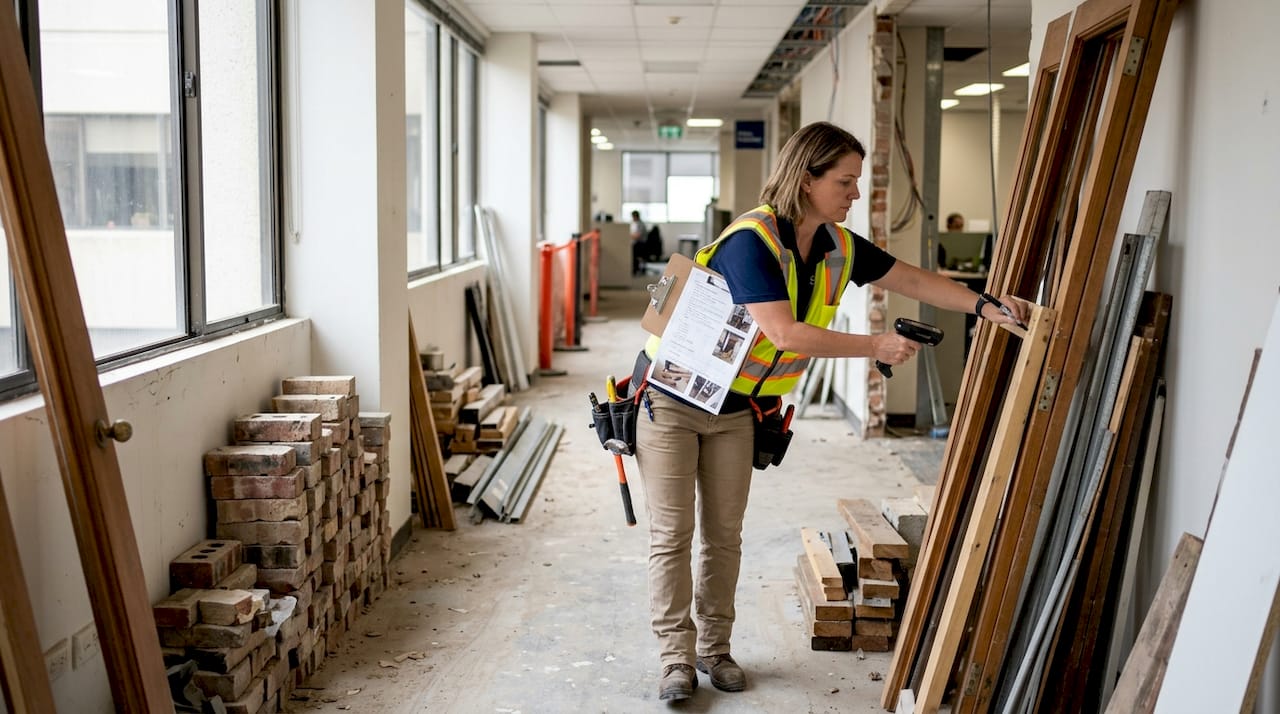
Pro Tip: Document all salvaged and reused materials with photographs and specifications. This record supports embodied carbon calculations and provides valuable case study data for future projects.
Center for Sustainable Landscapes: Multi-certification and ecological integration
While retrofit maximizes existing resources, ground-up ecological integration can achieve even more ambitious regenerative goals. The Center for Sustainable Landscapes in Pittsburgh holds an unprecedented combination of certifications: LEED Platinum, Living Building Challenge, WELL Platinum, and SITES 4-star.
Built on a former brownfield site, CSL demonstrates comprehensive ecological restoration:
- Complete site remediation and native ecosystem establishment
- Closed-loop water system treating all wastewater onsite for reuse
- Hybrid renewable energy combining solar photovoltaic, geothermal wells, and wind turbines
- Native plant communities supporting local pollinator populations
The building achieves net-zero energy and water performance annually, generating as much renewable energy as it consumes and treating all water onsite. This eliminates dependence on municipal infrastructure while actively improving watershed health.
“True regenerative design doesn’t just reduce harm. It actively heals damaged ecosystems and creates conditions for biodiversity to flourish.”
Slate School: Passive House standards for education
Educational facilities offer unique opportunities to demonstrate sustainable design principles to future generations. Slate School achieves an EUI of just 22 kBtu/ft²/year through Passive House Institute US (PHIUS) certification, setting a new benchmark for Connecticut schools.
The project prioritizes envelope performance and healthy materials:
- PHIUS-certified envelope with exceptional airtightness and insulation
- Mass timber structure reducing embodied carbon by 30% versus steel
- Onsite stormwater management achieving zero runoff to municipal systems
- Generous daylighting reducing electric lighting loads by 60%
Passive House standards focus on five core principles: continuous insulation, airtight construction, high-performance windows, balanced ventilation with heat recovery, and elimination of thermal bridges. These strategies work in any climate, though specific details vary by region.
The health benefits extend beyond energy savings. Continuous fresh air ventilation with MERV 13 filtration maintains excellent indoor air quality, reducing student absences and improving learning outcomes. Natural daylighting supports circadian rhythms and reduces eye strain.
Pro Tip: Engage mechanical contractors early in Passive House projects. The integrated design process requires close coordination between envelope and systems, and contractor input during design prevents costly field changes.
Del Ray Passive House: Advanced envelope and resilience
High-performance residential design demonstrates how envelope-focused strategies deliver comfort, efficiency, and climate resilience. Del Ray Passive House in Alexandria, Virginia features an envelope five times tighter than code requirements, paired with renewable energy and water management systems.
The comprehensive approach addresses multiple sustainability dimensions:
- Airtight construction verified at 0.6 air changes per hour at 50 Pascals
- Geothermal heat pump providing efficient heating and cooling
- Solar photovoltaic array with battery storage ensuring resilience during grid outages
- Vegetated green roof reducing stormwater runoff and urban heat island effect
- Rain garden capturing and filtering all site runoff
Battery storage paired with solar generation provides true energy resilience. During power outages, the home maintains heating, cooling, and critical loads indefinitely as long as the sun shines. This resilience becomes increasingly valuable as climate change intensifies extreme weather events.
Pro Tip: Size battery storage based on critical loads, not whole-house consumption. Prioritizing refrigeration, heating/cooling, and lighting allows smaller, more affordable battery systems while maintaining essential comfort and safety.
Hayward Library: Community-driven zero energy public space
Public buildings carry additional responsibility to serve diverse communities equitably while modeling sustainability. The Hayward Library in California became the nation’s largest net-zero public library through community engagement and integrated renewable systems.
The project demonstrates equity-focused sustainable design:
- Extensive community workshops ensuring design serves diverse user needs
- 1,200 solar panels integrated across building roof and parking structure
- Radiant floor heating and cooling reducing energy consumption
- Locally sourced materials supporting regional economy and reducing transportation emissions
Community engagement shaped everything from program spaces to material selections. Residents prioritized natural light, flexible meeting areas, and outdoor reading spaces. These preferences aligned perfectly with sustainable design strategies, proving that community needs and environmental performance reinforce rather than conflict with each other.
“When you genuinely listen to community voices, you discover that people want exactly what sustainable design delivers: healthy spaces, natural light, connection to nature, and long-term value.”
Bush School Upper School: Passive House for the Pacific Northwest
Regional climate adaptation distinguishes good sustainable design from great sustainable design. Bush School Upper School in Seattle became the largest Passive House-certified school in the Western United States while addressing Pacific Northwest-specific challenges.
The design responds directly to regional conditions:
- Passive House envelope adapted for marine climate with high humidity
- Cross-laminated timber structure celebrating regional forest products and biophilic design
- Salmon Safe certification protecting critical watershed health
- Net-zero energy performance despite limited solar access in cloudy climate
Mass timber construction delivers multiple benefits simultaneously. The exposed wood creates warm, inspiring learning environments while sequestering carbon and supporting sustainable forestry. Regional sourcing reduces transportation emissions and strengthens local economies.
Stormwater strategies go beyond retention to active watershed restoration. Bioswales, rain gardens, and permeable paving slow runoff, filter pollutants, and recharge groundwater. Salmon Safe certification verifies that site systems protect the aquatic ecosystems essential to Pacific Northwest ecology and culture.
Comparing the examples: What strategies fit your project?
Each project demonstrates tailored approaches for different typologies, climates, and goals. The table below summarizes key metrics and strategies:
| Project | EUI (kBtu/ft²/yr) | Primary Certification | Site Strategy | Resilience Feature |
|---|---|---|---|---|
| GCAD | Low 40s | Carbon Neutral | Urban retrofit | PV array |
| CSL | Net-zero | Living Building, LEED Platinum | Brownfield restoration | Hybrid renewables |
| Slate School | 22 | PHIUS | Zero stormwater runoff | Mass timber |
| Del Ray | PHIUS target | PHIUS | Rain garden, green roof | Solar + battery |
| Hayward Library | Net-zero | Net-zero | Parking solar integration | 1,200 PV panels |
| Bush School | Net-zero | PHIUS, Salmon Safe | Watershed protection | CLT structure |
When selecting strategies for your next project, consider this decision framework:
- Evaluate retrofit potential first. Existing buildings offer immediate embodied carbon savings and often faster paths to occupancy.
- Match envelope strategy to climate. Passive House principles apply everywhere, but specific assemblies and details must respond to regional temperature, humidity, and solar conditions.
- Integrate renewables early. Solar orientation, structural loads, and electrical infrastructure affect architectural design and must be coordinated from concept phase.
- Prioritize water as highly as energy. Stormwater management, water reuse, and watershed protection deliver ecological benefits that energy efficiency alone cannot achieve.
- Engage community throughout. Equity and sustainability reinforce each other when you genuinely incorporate diverse voices into design decisions.
Retrofit proves preferable to new construction when existing structures offer sound bones, good locations, and embodied carbon worth preserving. New construction makes sense when sites enable superior ecological integration or when existing buildings cannot achieve necessary performance without prohibitive investment.
Advance your sustainable design expertise
The projects above demonstrate what’s possible when you combine clear criteria, proven strategies, and commitment to measurable performance. As building codes tighten and clients demand greater sustainability, your expertise in these approaches becomes increasingly valuable.
Staying current with evolving green design practices benefits both your professional development and your clients’ long-term success. Our green design CE courses provide AIA-registered continuing education covering Passive House principles, embodied carbon reduction, regenerative design strategies, and emerging certification frameworks. Each course draws on real-world projects like those featured here, giving you practical knowledge you can apply immediately to your next design.
Whether you’re pursuing LEED credentials, exploring Living Building Challenge, or simply seeking to improve your projects’ environmental performance, structured continuing education helps you move from theory to practice with confidence. The investment in your knowledge pays dividends across every future project.
Frequently asked questions
What are the core elements of green design in architecture?
Core elements include energy efficiency, healthy materials, water management, carbon impact reduction, and integration with local ecology. The AIA’s framework covers integration, ecosystem health, water, energy, materials, and community in a comprehensive approach.
Why is retrofit often greener than new construction?
Retrofit maximizes embodied carbon savings, reduces demolition waste, and often enhances building performance affordably. GCAD’s retrofit reduced embodied carbon by 55% versus new build while achieving carbon neutrality.
How do Passive House standards support green design?
Passive House standards set ultra-low energy targets with a focus on airtightness, comfort, and resilience in all climates. Slate School and Bush School both leverage Passive House for sustainable high performance across different building types.
What certifications are most valued for green projects?
LEED, Living Building Challenge, Passive House, WELL, and SITES are among the most sought-after for comprehensive green credentials. CSL uniquely holds LEED Platinum, Living Building, WELL Platinum, and SITES certifications, demonstrating multiple pathways to excellence.
How can architects balance sustainability with project budgets?
Integrated design from project start reduces costs by optimizing systems together rather than adding green features later. Passive strategies like orientation, daylighting, and natural ventilation often cost nothing but deliver permanent operational savings that justify any premium for high-performance envelopes or systems.