

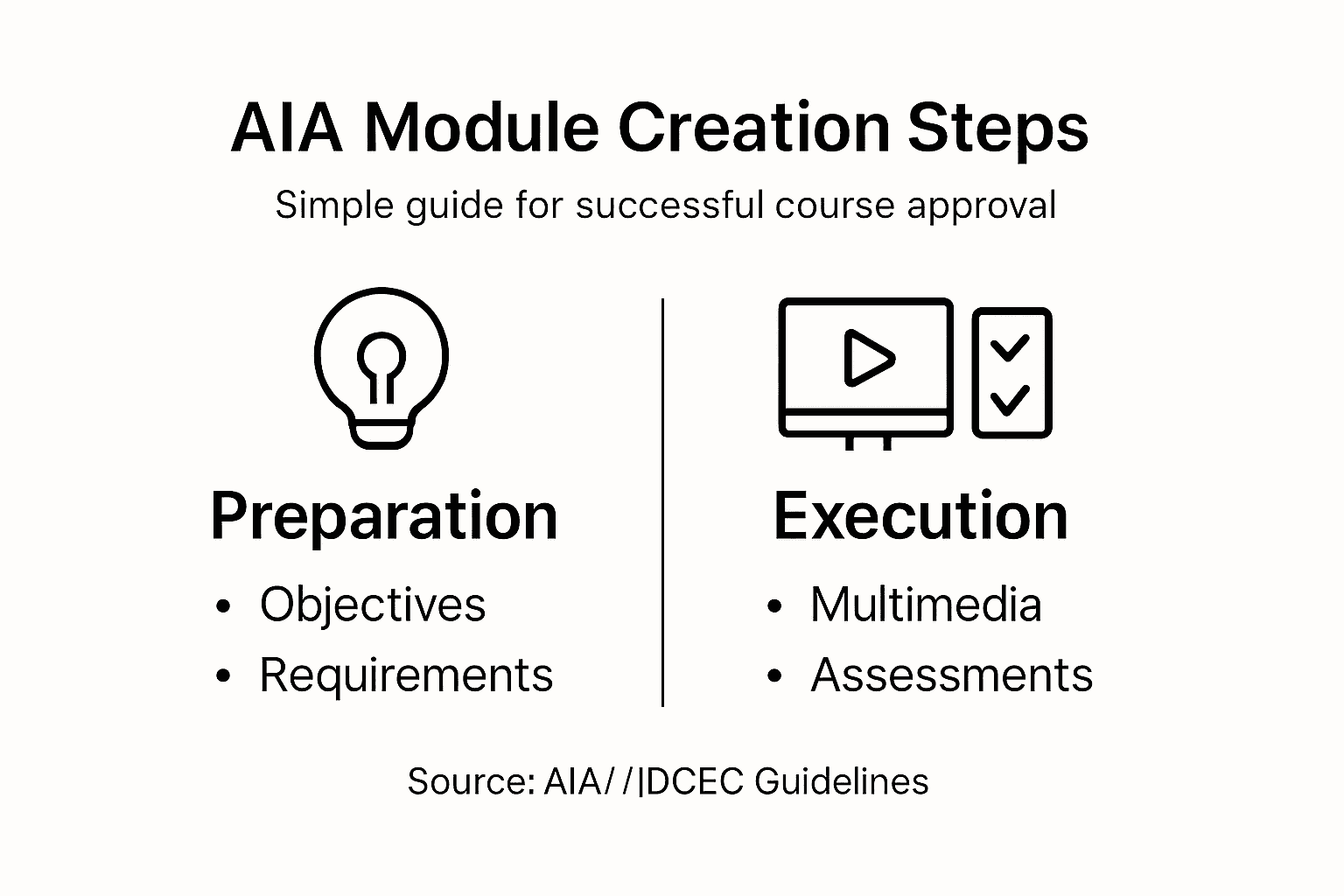
Building online learning modules that qualify for AIA and IDCEC credits often feels like balancing creativity with strict compliance requirements. For architectural firms worldwide, clarity at the start of this process sets the tone for course success and professional recognition. This guide highlights the importance of defining impactful learning objectives and understanding official credit requirements, laying the groundwork for continuing education that truly advances your team’s knowledge and meets industry standards.
Table of Contents
- Step 1: Define Learning Objectives And Credit Requirements
- Step 2: Design Engaging Course Structure And Content
- Step 3: Develop Interactive Multimedia And Assessments
- Step 4: Upload Content To Your Learning Platform
- Step 5: Verify Alignment With AIA And IDCEC Standards
Quick Summary
| Main Insight | Detailed Explanation |
| 1. Define Effective Learning Objectives | Establish clear, measurable learning objectives tailored to AIA standards for meaningful participant outcomes. |
| 2. Design an Engaging Course Structure | Create a dynamic course framework that includes multimedia and real-world applications to retain learners’ attention. |
| 3. Focus on Interactive Multimedia | Implement interactive features and assessments that promote active learning and critical thinking skills in architects. |
| 4. Ensure Platform Compatibility | Select a learning platform that supports AIA requirements for secure access, tracking, and assessment integration. |
| 5. Verify Compliance with AIA Standards | Detail learning outcomes, instructor credentials, and assessment methods to ensure course approval from AIA and IDCEC. |
Step 1: Define learning objectives and credit requirements
Creating effective online learning modules for continuing education credits requires a strategic approach to defining clear learning objectives and understanding precise AIA credit requirements. Your goal in this initial stage is to establish a comprehensive framework that aligns educational content with professional development standards.
To craft impactful learning objectives, consider the specific knowledge and skills architects need to acquire. Break down your objectives into measurable outcomes that demonstrate what participants will learn. These objectives should directly connect with AIA continuing education guidelines and provide tangible professional value.
- Identify core competencies relevant to architectural practice
- Determine specific skill improvements expected from the module
- Align objectives with current industry standards and emerging trends
- Create clear, action-oriented learning statements
Understanding AIA credit requirements means diving deep into the specific criteria for earning professional development hours. Different types of courses have varying credit allocations, so carefully review the standard credit requirements:
- Evaluate the total credit hours your module can potentially offer
- Confirm the learning unit (LU) or hour designation
- Verify content meets AIA’s educational standards
- Document all learning outcomes meticulously
Learning objectives are the compass that guides your entire educational module, ensuring participants gain meaningful professional knowledge.
Pro tip: Consult directly with AIA providers to validate your learning objectives and confirm credit requirements before finalizing your course design.
Step 2: Design engaging course structure and content
Developing an engaging online learning module for AIA credits demands a thoughtful approach to structuring content that captures and maintains architectural professionals’ attention. Your primary objective is creating a learning experience that not only meets credit requirements but also provides genuine professional value.
Start by mapping out a comprehensive course framework that breaks complex architectural topics into digestible learning segments. Each module should include a clear progression of concepts, interactive elements, and practical applications that resonate with practicing architects. Successful courses often incorporate multimedia learning techniques that cater to different learning styles and keep participants actively engaged.
Key components of an effective course structure include:
- Modular content design with clear learning milestones
- Interactive multimedia elements like videos
- Real-world case studies demonstrating practical applications
- Assessment tools that reinforce key learning objectives
- Opportunities for professional reflection and skill application
Designing content requires a strategic approach to knowledge transfer. Architects need more than passive information consumption – they require immersive learning experiences that connect theoretical concepts with practical professional challenges. Consider developing content that:
- Addresses current industry trends and technological innovations
- Provides actionable insights applicable to daily architectural practice
- Includes expert perspectives and emerging professional strategies
- Offers evidence-based approaches to design and problem solving
Effective course design transforms information into transformative professional development experiences.
Pro tip: Create content variations that accommodate different learning preferences, ensuring your module remains accessible and engaging for diverse architectural professionals.
Step 3: Develop interactive multimedia and assessments
Creating compelling online learning modules for architectural professionals requires more than static content – you need dynamic multimedia experiences that transform passive learning into active engagement. Your goal is to develop interactive assessments and multimedia elements that challenge architects to think critically and apply complex design concepts.

Multimedia development should focus on creating rich, immersive learning experiences that leverage interactive design techniques to simulate real-world architectural challenges. Professional architects need learning modules that go beyond traditional lecture formats and provide opportunities for practical skill development.
Developing effective assessments requires a strategic approach to measuring professional comprehension and skill acquisition. Your assessment design should challenge participants while providing meaningful feedback that supports continuous learning. Consider implementing:
- Scenario-based knowledge tests
- Design problem-solving challenges
- Self-assessment reflection modules
- Peer review and collaborative evaluation techniques
Effective multimedia and assessments transform theoretical knowledge into practical professional competence.
Pro tip: Design assessments that mirror real-world architectural challenges, ensuring participants can directly translate learning into professional practice.
Step 4: Upload content to your learning platform
Successfully transforming your carefully crafted course content requires strategic uploading to a platform that meets AIA continuing education standards. Your mission is to ensure smooth, compliant content integration that provides architects with a seamless learning experience.
Choosing the right learning platform is crucial for delivering your educational content effectively. AIA course hosting platforms must support comprehensive tracking, secure access, and detailed learner progress monitoring. The technical infrastructure of your platform plays a critical role in meeting professional education requirements.
Key considerations when uploading course content include:
- Compatibility with AIA continuing education tracking systems
- Secure user authentication mechanisms
- Multimedia content support across devices
- Robust quiz and assessment integration
- Automatic credit tracking and reporting features
The content upload process demands meticulous attention to detail. Follow these strategic steps to ensure a smooth deployment:
Below is a reference table summarizing key platform features to consider when uploading AIA credit courses:
| Feature | Description | Professional Impact |
| Multimedia Support | Plays video, audio, interactive graphics | Enhances learner engagement |
| Secure Access | Robust login and authentication tools | Protects user data and content |
| Credit Tracking | Automated reporting to AIA systems | Eases CE credit management |
| Assessment Integration | Supports quizzes and feedback modules | Measures learning effectiveness |
Use this table to guide platform selection and deployment.
- Verify platform compatibility with AIA standards
- Organize content into logical, sequential modules
- Test all interactive elements before final upload
- Configure user access and tracking permissions
- Perform comprehensive system testing
Successful content uploads transform educational materials into valuable professional development experiences.
Pro tip: Create a comprehensive content checklist to validate every multimedia element and assessment before final platform integration.
Step 5: Verify alignment with AIA and IDCEC standards
Ensuring your online learning module meets the rigorous professional development standards of AIA and IDCEC requires meticulous attention to detail and comprehensive documentation. Your primary objective is to create a course that not only educates but also precisely meets the stringent requirements of these professional credentialing organizations.
Careful review of course approval guidelines is essential for maintaining compliance and credibility. The verification process involves a comprehensive examination of your course content, learning objectives, assessment methods, and overall educational value to architectural professionals.
Key compliance verification areas include:
- Detailed learning objective documentation
- Instructor professional credentials
- Content accuracy and current industry relevance
- Assessment methodology and rigor
- Clear demonstration of professional skill development
The verification process demands a systematic approach to demonstrating your course’s alignment with professional standards:
Here’s a quick comparison of AIA and IDCEC requirements for course approval:
| Requirement Area | AIA Standard | IDCEC Standard |
| Learning Objectives | Must be measurable and aligned | Must support interior design practice |
| Instructor Credentials | Industry expert or professional | Recognized industry professional |
| Assessment Rigor | Focus on applied knowledge | Stress on skill demonstration |
| Documentation Needed | Detailed outcomes and module content | Course outline and instructor bio |
This summary highlights essential aspects for course compliance.
- Cross-reference course content with AIA and IDCEC guidelines
- Document specific learning outcomes
- Prepare comprehensive instructor qualification materials
- Develop robust assessment mechanisms
- Create a detailed course submission package
Successful standards verification transforms your educational content from a simple module to an officially recognized professional development tool.
Pro tip: Maintain a meticulous documentation trail and anticipate potential reviewer questions to streamline the approval process.
Elevate Your AIA Credit Courses with Expert Guidance
Creating online learning modules for AIA credits is no small task. The article highlights crucial challenges such as defining measurable learning objectives, designing engaging multimedia content, and ensuring precise alignment with AIA and IDCEC standards. If you are striving to develop courses that truly resonate with architects while meeting all professional requirements, these complexities can feel overwhelming. Achieving the right balance between educational rigor and engaging delivery is essential to deliver measurable professional value.
At Ron Blank, we specialize in partnering with architects, engineers, and interior designers to develop continuing education courses that are officially registered with the American Institute of Architects. We understand the importance of comprehensive course design—from crafting clear learning objectives and interactive assessments to seamless platform integration that guarantees secure credit tracking. Our expertise extends beyond content creation to include ensuring that your courses comply fully with AIA and IDCEC approval standards. Discover the difference that professional support can make when you want your online modules to stand out and help professionals expand their skills confidently.
Are you ready to transform your course development process and confidently deliver AIA-approved online education?

Take the next step today by exploring how we can accelerate your educational initiatives. Visit Ron Blank now to learn how our services can support your vision and ensure your courses fulfill both professional and learner expectations. Elevate your continuing education offerings with our proven expertise.
Frequently Asked Questions
What are the key steps to define learning objectives for AIA credits?
To define learning objectives for AIA credits, focus on creating measurable outcomes that address architects’ specific knowledge and skills. Break down objectives into clear, action-oriented statements that align with AIA guidelines. Prioritize core competencies and emerging trends in architectural practice.
How can I structure my online learning module to engage architectural professionals?
Design your online learning module with a modular framework that includes clear learning milestones and interactive multimedia elements. Incorporate real-world case studies and practical applications that resonate with architects to enhance engagement. A well-structured course maintains attention and boosts knowledge retention.
What types of interactive multimedia should I include in my AIA credit modules?
Include 3D architectural modeling simulations, virtual design challenges, and animated technical demonstrations to create immersive learning experiences. These components help architects actively engage with the course content and apply their knowledge practically. Aim for a varied multimedia approach to cater to different learning styles.
How do I ensure compliance with AIA and IDCEC standards for my course?
To ensure compliance, carefully review the course approval guidelines for both AIA and IDCEC, documenting all learning objectives and assessment methodologies. Prepare detailed documentation that highlights how your course aligns with professional standards. Organizing this information increases your chances of approval.
What should I include in my instructor qualifications for the course?
Detail the relevant professional credentials and industry expertise of your instructors to demonstrate their qualifications. Include biographies that summarize their background and experience in the architectural field. This transparency builds credibility and aligns with AIA standards for course approval.
How can I verify that my learning module meets the necessary credit requirements?
Verify that your learning module meets the necessary credit requirements by cross-referencing with the official AIA educational standards. Keep meticulous documentation of learning objectives, content accuracy, and assessment methods to strengthen your case for credit allocation. Regularly review your course to ensure ongoing compliance.