

Long project deadlines and busy client schedules often leave architects and interior designers searching for smarter ways to meet state-required continuing education credits. The demand for flexible, accredited online accessibility courses is growing as professionals must stay up to date with American Institute of Architects (AIA) and Interior Design Continuing Education Council (IDCEC) mandates. This guide helps you select the most effective digital courses for accessibility and compliance, streamlining your path to license renewal and state approval.
Table of Contents
- What Online CE Courses Mean For Design Professionals
- Types Of Online CE: AIA, GBCI, And IDCEC
- Key Features Of Online Accessibility Courses
- Meeting California CE Credit And Compliance Needs
- Comparing Online, Hybrid, And In-Person Courses
Key Takeaways
| Point | Details |
| Flexibility of Online CE Courses | Online Continuing Education (CE) courses allow architects to fulfill licensure requirements without disrupting their professional commitments. |
| Certification Bodies and Focus Areas | The AIA, GBCI, and IDCEC offer specialized online courses that cater to different aspects of architectural education and compliance needs. |
| Importance of Accessibility Training | Accessibility courses are crucial for architects to create inclusive designs that meet legal standards and enhance user experience. |
| Choosing the Right Course Format | Architects should select course formats—online, hybrid, or in-person—based on their personal learning styles and career demands. |
What Online CE Courses Mean for Design Professionals
Online Continuing Education (CE) courses have transformed professional development for architects, offering unparalleled flexibility and accessibility in maintaining critical licensure requirements. Design professionals can now complete mandatory educational credits without disrupting their work schedules or travel commitments, making ongoing learning more convenient than ever.
These digital learning platforms specifically cater to architectural professionals by providing specialized courses approved by key certification bodies like the American Institute of Architects (AIA), Green Building Certification Institute (GBCI), and Interior Design Continuing Education Council (IDCEC). Such courses cover critical areas including building codes, sustainability practices, design technology, professional ethics, and emerging industry trends. Architects can strategically select courses that directly enhance their professional competencies and meet specific licensure requirements for their state.
The digital format of online CE courses offers several significant advantages for design professionals. Unlike traditional in-person seminars, online courses provide self-paced learning environments where architects can consume educational content during convenient times – whether early morning, late evening, or between project deadlines. Many platforms offer interactive modules, video lectures, comprehensive quizzes, and immediate certification documentation, streamlining the entire continuing education process.
Pro Tip: Check your state licensing board’s specific CE requirements before selecting online courses to ensure full compliance with professional development standards.
Types of Online CE: AIA, GBCI, and IDCEC
Architects seeking continuing education have three primary certification bodies offering specialized online learning opportunities: the American Institute of Architects (AIA), Green Building Certification Institute (GBCI), and Interior Design Continuing Education Council (IDCEC). Each organization provides unique educational pathways designed to meet specific professional development requirements for design professionals.
The AIA offers comprehensive online courses that cover critical areas such as professional practice, building technology, design innovation, and sustainable design strategies. These courses typically range from 1 to 4 learning units (LUs) and provide direct credit toward architectural licensure requirements. Building safety training through platforms like the International Code Council complement these offerings, ensuring architects stay current with evolving industry standards and regulatory frameworks.
The Green Building Certification Institute (GBCI) focuses specifically on sustainability and environmental design, offering online courses that support LEED professional credentials. These courses explore advanced green building techniques, energy efficiency strategies, and sustainable design principles. Interior design professionals can leverage IDCEC courses, which provide specialized training in interior design practice, materials selection, accessibility standards, and emerging design technologies.
Here’s a summary of the major online CE course certification bodies and their focus areas:
| Certification Body | Core Topics | Typical Course Credits | Career Benefit |
| AIA | Practice, tech, innovation | 1-4 learning units | Broad licensure support |
| GBCI | Sustainability, LEED design | Varies by credential | Green building expertise |
| IDCEC | Interior, materials, accessibility | Varies by topic | Interior specialization |
Pro Tip: Cross-reference course offerings across multiple certification platforms to maximize your continuing education credits and diversify your professional knowledge base.
Key Features of Online Accessibility Courses
Online accessibility courses for architects and design professionals provide comprehensive training in creating inclusive environments that meet critical legal and ethical standards. These specialized educational programs focus on understanding universal design principles, implementing adaptive technologies, and ensuring compliance with Americans with Disabilities Act (ADA) requirements across architectural and interior design projects.

Foundational accessibility training covers essential skills including spatial design, adaptive technology integration, and comprehensive understanding of diverse user needs. Courses typically explore multiple dimensions of accessibility, from physical space configuration to digital interface design, helping professionals develop holistic approaches to inclusive design strategies. Key learning modules often address wheelchair accessibility, sensory design considerations, navigational challenges, and technological accommodations for individuals with various physical and cognitive abilities.
Professional online accessibility courses offer flexible learning formats that cater to architects’ demanding schedules. These programs frequently include interactive modules, case study analyses, practical design scenarios, and comprehensive assessments that validate learners’ understanding of complex accessibility standards. Instructor-led digital training enables design professionals to engage with expert practitioners, learn cutting-edge accessibility techniques, and develop nuanced strategies for creating truly inclusive architectural environments.
Pro Tip: Document your accessibility course completions carefully, as these credentials can significantly enhance your professional portfolio and demonstrate commitment to universal design principles.
Meeting California CE Credit and Compliance Needs
Architects practicing in California face unique continuing education requirements that demand strategic and precise approach to professional development. California Architects Board regulations mandate specific continuing education credits that go beyond standard national requirements, focusing on state-specific environmental standards, accessibility guidelines, and sustainable design principles.
The state’s continuing education landscape emphasizes critical areas such as energy efficiency, zero net carbon design, and advanced accessibility standards. Energy code updates introduce complex requirements that architects must master, including the California Energy Code. These regulations require professionals to complete specialized courses addressing greenhouse gas reduction, indoor environmental quality, and cutting-edge sustainable design technologies.
California’s CE requirements are particularly stringent, demanding architects complete a minimum number of hours in specific topic areas. Courses must cover crucial domains including disability access and Zero Net Carbon Design (ZNCD). Online CE platforms offer targeted programs that precisely align with California Architects Board mandates, allowing design professionals to efficiently meet their licensure maintenance requirements while gaining advanced professional knowledge.
Pro Tip: Maintain a detailed digital portfolio of your completed CE courses, tracking credits across different certification categories to ensure you consistently meet California’s complex continuing education requirements.
Comparing Online, Hybrid, and In-Person Courses
Continuing education for architects has evolved dramatically, offering multiple learning formats that cater to diverse professional needs and learning preferences. Hybrid learning approaches have emerged as a particularly flexible solution, bridging the gap between traditional classroom instruction and digital learning platforms.
Online courses provide unparalleled convenience, allowing architects to complete continuing education credits from anywhere with internet access. These digital platforms typically feature comprehensive multimedia content, interactive modules, and self-paced learning structures that accommodate busy professional schedules. In contrast, in-person courses offer direct interaction with instructors and peers, creating networking opportunities and immediate feedback mechanisms that some professionals find invaluable. Blended learning frameworks represent a strategic middle ground, combining the flexibility of online learning with the engagement of face-to-face interactions.
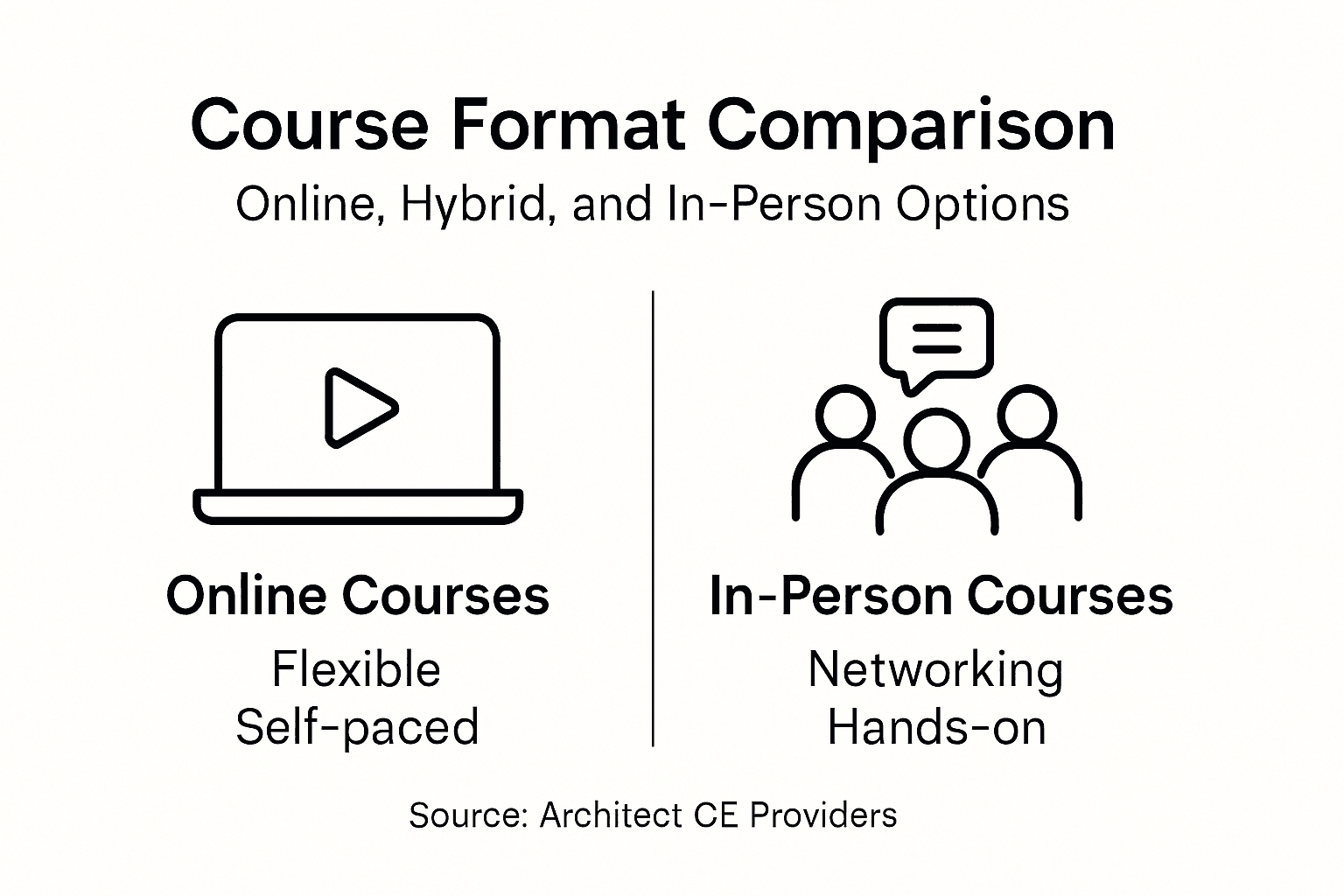
Each course format presents unique advantages for design professionals. Online courses excel in accessibility and time management, hybrid courses provide balanced learning experiences, and traditional in-person courses maintain strong interpersonal learning dynamics. Architects must carefully evaluate their individual learning styles, professional commitments, and specific continuing education requirements when selecting the most appropriate course delivery method.
Compare the strengths of online, hybrid, and in-person learning formats for architects:
| Format | Flexibility | Interaction Level | Unique Strength |
| Online | Highest | Limited | On-demand access |
| Hybrid | Moderate | Strong | Balanced engagement |
| In-Person | Lowest | Maximum | Peer networking |
Pro Tip: Select your continuing education course format based on your personal learning style, current professional workload, and specific credit requirements, not just convenience.
Elevate Your Architectural Career with Expert Online CE Courses
The challenge architects face today is balancing demanding project schedules while meeting strict continuing education requirements. You need flexible, accredited courses that cover critical topics like accessibility, sustainability, and building technology without compromising your professional commitments. Our online courses registered with the American Institute of Architects offer just that. Designed for architects who value convenience and compliance, these courses help you earn credits efficiently while deepening your expertise in areas such as universal design principles and California-specific energy codes.

Take control of your professional development now by choosing the reliable, comprehensive online continuing education solutions at Ron Blank and Associates. Explore our wide range of educational formats including webinars and podcasts that fit seamlessly into your busy life. Visit Ron Blank and Associates today to discover how our tailored courses can help you meet licensure requirements with confidence and enhance your architectural portfolio.
Frequently Asked Questions
What are the advantages of online CE courses for architects?
Online CE courses offer flexibility, allowing architects to learn at their own pace, accommodating busy schedules without the need for travel. They also provide immediate access to a wide range of specialized topics relevant to licensure requirements.
How do I find state-approved online CE courses for architects?
You can check your state licensing board’s website for approved online CE courses. Many platforms offer courses specifically tailored to meet the requirements set by certification bodies like the AIA, GBCI, and IDCEC.
What topics are typically covered in online CE courses for architects?
Online CE courses generally cover critical areas such as building codes, sustainability practices, design technology, and professional ethics, ensuring architects stay updated with industry standards and advancements.
How can I ensure that the online CE courses I choose are compliant with my state’s requirements?
It’s essential to verify your state licensing board’s specific CE requirements before enrolling in courses. Many online platforms highlight compliance, but cross-referencing with your state’s regulations helps ensure you meet all necessary professional development standards.
Recommended
About the Author:
Brad Blank is a building product specification advisor focused on AIA education and LEED certification. With over 25 years in the AEC industry working alongside architects, engineers, and building product manufacturers, their work centers on getting building products specified and developing education tools for design professionals.
He produces AIA online courses, GBCI education, construction podcasts, and FAQs intended to help architects, engineers, and interior designers. In addition, he helps coordinate development of Health Product Declarations (HPDs) and LEED product documentation.