
Nearly 40 percent of all American greenhouse gas emissions come from buildings, placing architects and engineers at the heart of the climate solution. In countries like Canada and the United States, LEED certification sets the bar for innovative, environmentally responsible design. This guide reveals what LEED really means for design professionals aiming to enhance project outcomes and stay competitive within the demanding North American market.
Table of Contents
- What Is LEED Certification And Why It Matters
- Different Levels And Types Of LEED Projects
- LEED V5: New Standards And Innovations
- Essential LEED Requirements And Process Steps
- LEED Documentation, Costs, And Common Pitfalls
- GreenCE.com Resources For LEED Exam Prep
Key Takeaways
| Point | Details |
| Understanding LEED Certification | LEED certification represents a global standard for sustainable building practices evaluating energy efficiency, water conservation, and more. |
| Levels of Recognition | Projects can achieve varying levels of certification: Certified, Silver, Gold, and Platinum based on their sustainability score. |
| LEED v5 Innovations | LEED v5 emphasizes near-zero carbon emissions, occupant wellness, and ecological restoration, necessitating a more integrated design approach. |
| Essential Certification Process | Navigating LEED certification requires meticulous planning, comprehensive documentation, and strategic execution of prerequisites and credits. |
What Is LEED Certification and Why It Matters
LEED, an acronym for Leadership in Energy and Environmental Design, represents the premier global standard for green building practices. Widely recognized sustainability framework developed by the United States Green Building Council (USGBC), this certification system provides design professionals a comprehensive approach to creating environmentally responsible buildings.
At its core, LEED certification evaluates buildings across multiple sustainability dimensions including energy efficiency, water conservation, material selection, waste management, and indoor environmental quality. Design professionals utilize this framework to transform traditional construction approaches, creating structures that minimize environmental impact while maximizing operational performance. The certification process involves earning points across specific credit categories, with buildings achieving different levels of recognition – Certified, Silver, Gold, and Platinum – based on their total sustainability score.
For architects and engineers, LEED certification represents more than an environmental award. Professional competitiveness in sustainable design becomes significantly enhanced through understanding and implementing these standards. By integrating LEED principles, design professionals demonstrate technical expertise, environmental stewardship, and commitment to innovative building solutions that address critical climate challenges.
Pro Tip: Invest time in GreenCE.com for comprehensive LEED exam preparation resources and continuing education credits specific to sustainable design strategies.
Different Levels and Types of LEED Projects
LEED certification encompasses multiple project types and rating systems designed to address diverse built environment challenges. Comprehensive rating systems span several primary categories: Building Design and Construction (BD+C), Interior Design and Construction (ID+C), Building Operations and Maintenance (O+M), Neighborhood Development (ND), Homes, and Cities. Each category tailors sustainability evaluation to specific project contexts and developmental stages.
The certification process involves earning points across defined credit categories, with projects achieving four distinct recognition levels: Certified, Silver, Gold, and Platinum. These levels reflect increasingly sophisticated sustainability strategies, with Platinum representing the highest standard of environmental performance. Architects and engineers must strategically integrate sustainable design principles across energy efficiency, water conservation, materials selection, waste management, and indoor environmental quality to progress through these certification tiers.
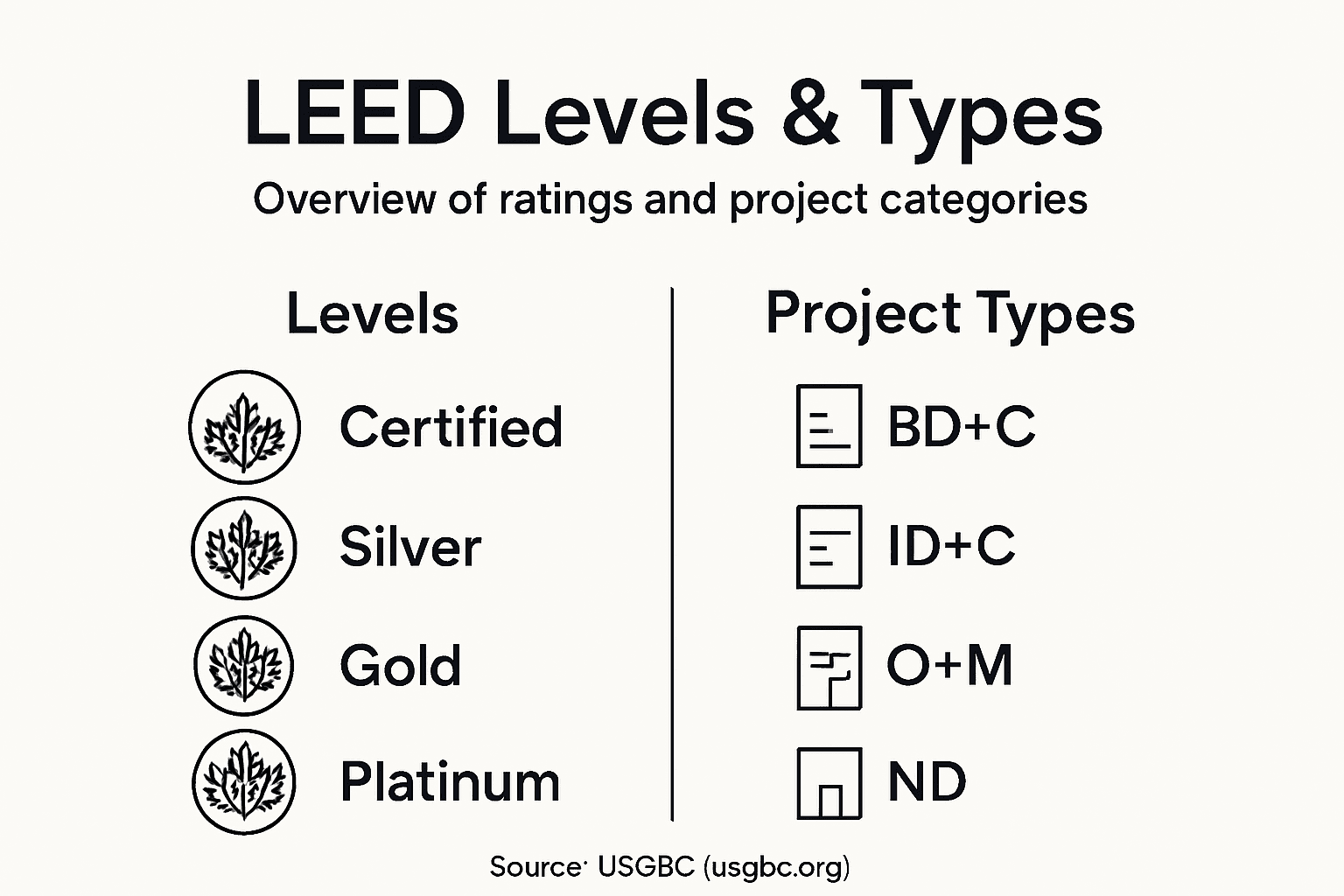
Design professionals must understand the nuanced requirements for each LEED project type. BD+C focuses on new construction and major renovations, while ID+C addresses interior spaces and tenant improvements. O+M targets existing building performance and operational strategies, Neighborhood Development evaluates entire community planning efforts, Residential addresses single-family and multifamily housing, and Cities examines comprehensive urban sustainability frameworks. Each system requires specialized knowledge and approach, challenging design professionals to develop holistic, integrated sustainability solutions.
Pro Tip: Consider purchasing comprehensive study materials from GreenCE.com to master the intricate details of each LEED project type and certification level.
Here’s a quick comparison of the six primary LEED rating systems and their focus areas:
| LEED System | Project Focus | Typical Applications |
| BD+C | New buildings and major renovations | Offices, schools, hospitals |
| ID+C | Interior spaces and tenant improvements | Retail stores, commercial interiors |
| O+M | Existing building operations | Office towers, hotels |
| Neighborhood Development | Entire communities | Mixed-use developments, districts |
| Homes | Single and multi-family homes | Apartments, townhouses |
| Cities | Urban sustainability | City planning, municipal projects |
LEED v5: New Standards and Innovations
LEED v5 represents a transformative leap forward in green building standards, introducing a comprehensive approach to sustainability that goes beyond traditional environmental metrics. Groundbreaking green building standard focuses on three critical impact areas: decarbonization, quality of life, and ecological conservation. This newest iteration challenges design professionals to reimagine building performance through a more holistic and integrated lens, addressing the complex environmental and social challenges of the 21st century.
The most significant innovations in LEED v5 include more rigorous requirements for near-zero carbon emissions, enhanced emphasis on occupant health and well-being, and a renewed commitment to ecological restoration. Design professionals will encounter new certification levels with more stringent performance criteria, expanding beyond previous frameworks to include advanced credits in transportation demand management, social equity, building resilience, and comprehensive operational impact planning. These changes reflect a more nuanced understanding of sustainability that considers not just environmental performance, but broader human and ecological implications.
Architects and engineers must now develop more sophisticated strategies that integrate technological innovation, human-centered design, and ecological regeneration. The new standard demands a more interdisciplinary approach, requiring professionals to collaborate across traditional disciplinary boundaries. By prioritizing carbon reduction, occupant wellness, and ecosystem health, LEED v5 signals a profound shift from minimizing negative environmental impacts to actively creating positive, regenerative building systems that contribute meaningfully to community and planetary well-being.
Pro Tip: Utilize GreenCE.com for comprehensive LEED v5 training and updated certification preparation resources.
This summary highlights key differences between LEED v4 and LEED v5 innovations:
| Aspect | LEED v4 Focus | LEED v5 Advancements |
| Carbon Requirements | Emissions reduction encouraged | Near-zero carbon emissions required |
| Health and Well-being | Indoor air quality prioritized | Deeper focus on occupant wellness |
| Ecological Conservation | Sustainable site strategies | Active ecosystem restoration |
| Social Equity & Resilience | Limited social equity emphasis | Expanded social equity and resilience credits |
Essential LEED Requirements and Process Steps
Navigating the LEED certification process requires a systematic approach that demands meticulous planning and comprehensive documentation. LEED certification process begins with critical initial steps that set the foundation for a successful sustainability project. Design professionals must first register their project and carefully select the appropriate rating system that aligns with their specific building type, whether it involves new construction, interior renovations, or existing building operations.

The certification journey involves multiple essential stages that demand strategic execution. Project teams must first fulfill mandatory prerequisites, which establish minimum performance standards across key sustainability dimensions. These prerequisites cover critical areas such as energy efficiency, water conservation, materials selection, and indoor environmental quality. After meeting these foundational requirements, teams can then pursue optional credits that enable them to accumulate points across various sustainability categories. The total points earned will ultimately determine the project’s certification level – ranging from Certified to Platinum – with each tier representing increasingly sophisticated sustainability achievements.
The documentation and review process represents the most rigorous component of LEED certification. Project teams must compile comprehensive evidence demonstrating compliance with each pursued credit and prerequisite. This involves preparing detailed submittals, including performance data, material specifications, design calculations, and narrative explanations that substantiate the project’s sustainable design strategies. Green Business Certification Inc. (GBCI) conducts both preliminary and final reviews, thoroughly examining the submitted documentation to verify that all sustainability claims meet the established LEED standards. Successful navigation of this review process requires not just technical expertise, but also exceptional organizational skills and a commitment to transparency.
Pro Tip: Invest in detailed project tracking software and maintain meticulous records throughout the LEED certification process to streamline documentation and increase your likelihood of successful certification.
LEED Documentation, Costs, and Common Pitfalls
Successful LEED certification hinges on understanding the complex financial and administrative landscape of the credentialing process. LEED registration and certification fees vary significantly based on project type, size, and selected rating system. Design professionals must budget carefully, recognizing that fees include initial registration costs and subsequent review expenses, with member organizations receiving potential discounts that can offset overall project expenditures.
The documentation process represents a critical bottleneck where many projects encounter significant challenges. Comprehensive and precise documentation is essential, requiring project teams to meticulously track and report sustainability metrics across multiple performance categories. Common pitfalls include incomplete submissions, inconsistent data reporting, and failure to use the most current credit calculators. Successful teams develop robust tracking systems that anticipate potential review challenges, maintaining comprehensive records that demonstrate clear compliance with each pursued credit and prerequisite.
Navigating the LEED certification review process demands exceptional organizational skills and technical expertise. Green Business Certification Inc. (GBCI) conducts rigorous preliminary and final reviews, examining submitted documentation with exacting standards. Design professionals must prepare detailed submittals that include performance data, material specifications, design calculations, and narrative explanations substantiating sustainable design strategies. Strategic preparation involves not just technical accuracy, but also clarity of presentation and anticipation of potential reviewer inquiries.
Pro Tip: Develop a dedicated project management system specifically designed for tracking LEED documentation, ensuring real-time updates and comprehensive evidence compilation throughout the certification process.
GreenCE.com Resources for LEED Exam Prep
Preparing for the LEED professional credential exams requires comprehensive and strategic study resources that go beyond traditional learning materials. LEED exam preparation resources offer design professionals multiple pathways to acquire essential knowledge about sustainable building practices, certification processes, and complex sustainability frameworks. GreenCE.com provides targeted educational materials specifically designed to help architects, engineers, and design professionals successfully navigate the rigorous LEED credentialing process.
The platform offers a multifaceted approach to exam preparation, including online courses, webinars, practice exams, and comprehensive study guides that cover the latest LEED rating systems and sustainability standards. These resources are meticulously crafted to address the specific challenges faced by design professionals seeking LEED Green Associate or LEED Accredited Professional credentials. Interactive learning modules break down complex sustainability concepts, providing clear explanations of credit requirements, performance metrics, and assessment strategies that are critical for exam success.
Successful LEED exam preparation demands more than memorization of technical details. GreenCE.comemphasizes developing a holistic understanding of sustainable design principles, encouraging professionals to think critically about environmental performance, building systems integration, and innovative sustainability strategies. By offering continuing education credits, detailed performance tracking, and expert-developed content, the platform supports design professionals in not just passing the exam, but developing genuine expertise in sustainable design methodologies.
Pro Tip: Develop a structured study schedule that allocates specific time for different LEED exam content areas, focusing on consistent, incremental learning rather than last-minute cramming.
Master LEED Certification and Elevate Your Sustainable Design Expertise
Understanding the complexities of LEED certification can be overwhelming. The challenges of navigating multiple certification levels, meeting stringent carbon reduction goals, and preparing detailed documentation require focused knowledge and practical skills. If you are an architect or engineer aiming to integrate LEED v5 standards effectively or struggling to streamline your certification process, you need targeted continuing education aligned with these evolving requirements.
Our continuing education courses are specially designed to help design professionals conquer these hurdles. With learning options including online courses, webinars, and face-to-face training, you can build confidence in sustainable design, from mastering LEED prerequisites to advancing through certification tiers.
Enhance your technical expertise and gain a competitive edge with proven strategies that address carbon emissions, occupant wellness, and ecological conservation as highlighted in the latest LEED updates.
Take control of your professional growth now
Empower your LEED journey today by exploring our comprehensive education resources at GreenCE. Don’t let documentation challenges or evolving standards hold you back. Visit GreenCE and start advancing your green building credentials with confidence.
Frequently Asked Questions
What is LEED certification?
LEED certification, or Leadership in Energy and Environmental Design, is a globally recognized sustainability framework designed to promote environmentally responsible building practices across various project types.
How does the LEED certification process work?
The LEED certification process involves registering the project, fulfilling mandatory prerequisites in sustainability categories, and earning optional credits to accumulate points, which determine the certification level achieved.
What are the levels of LEED certification?
LEED certification has four recognition levels: Certified, Silver, Gold, and Platinum, which reflect increasing degrees of sustainability accomplishment based on the total points earned during the certification process.
What are the primary rating systems for LEED projects?
There are several primary LEED rating systems designed for different project types: Building Design and Construction (BD+C), Interior Design and Construction (ID+C), Building Operations and Maintenance (O+M), Neighborhood Development (ND), Homes, and Cities.