

Many professionals assume LEED certification applies only to entire buildings, overlooking a powerful framework designed specifically for interior spaces. LEED v5 includes the Interior Design and Construction (ID+C) rating system, which targets tenant improvements, commercial interiors, and retail spaces. This certification verifies sustainable design choices, enhances occupant health, and delivers measurable cost savings. Understanding how LEED v5 applies to interiors empowers architects, designers, and engineers to create spaces that meet rigorous environmental standards while advancing professional expertise in sustainable building practices.
Table of Contents
- What Is LEED Certification In Interiors?
- Core Components And Prerequisites Of LEED V5 For Interiors
- LEED V5’s Multi-Attribute Product Framework And Achieving Certification Levels
- Real-World Impact: Benefits And Examples Of LEED-Certified Interiors
- Explore Professional LEED Consulting And Interior Design Support
- What Is The Difference Between LEED For Interiors And LEED For Entire Buildings?
- How Does The New LEED V5 Emphasize Decarbonization In Interior Projects?
- What Are Some Key Benefits Of LEED Certification For Interior Spaces?
- How Long Does The LEED Certification Process Take For Interior Projects?
Key takeaways
| Point | Details |
|---|---|
| LEED v5 ID+C rating | Interior Design and Construction system certifies tenant spaces and commercial interiors, not entire buildings. |
| Point-based achievement | Projects earn certification by meeting prerequisites and accumulating credits across multiple sustainability categories. |
| Decarbonization focus | LEED v5 prioritizes carbon reduction, health outcomes, and social equity in interior environments. |
| Certification levels | Scores determine four levels: Certified, Silver, Gold, and Platinum based on points earned. |
| Professional benefits | Sustainable interiors reduce operating costs, improve occupant wellbeing, and demonstrate environmental leadership. |
What is LEED certification in interiors?
LEED certification verifies that interior environments meet rigorous standards for sustainability, resource efficiency, and occupant health. The LEED v5 ID+C rating system specifically addresses tenant spaces, commercial interiors, retail environments, and hospitality projects where building owners or tenants control interior design and construction decisions. Unlike whole-building certification, ID+C focuses exclusively on interior improvements within existing structures.
The certification operates through a point system. Projects must satisfy mandatory prerequisites, then earn credits across categories like energy performance, water efficiency, material selection, and indoor air quality. Accumulating points determines the final certification level. This structured approach allows design teams to prioritize strategies that align with project goals while meeting baseline sustainability requirements.
Professionals pursuing LEED certification gain multiple advantages:
- Environmental responsibility through reduced resource consumption and waste
- Enhanced occupant health via improved air quality and natural light access
- Operational savings from lower utility costs and maintenance expenses
- Market differentiation demonstrating commitment to sustainable design
- Professional development advancing expertise in green building practices
The guide to LEED certification interiors explains how interior-focused certification addresses the unique challenges of renovating existing spaces. Projects can achieve meaningful sustainability outcomes without controlling building systems like HVAC or envelope performance. This flexibility makes LEED interiors accessible for tenant improvement projects where designers work within existing building constraints.
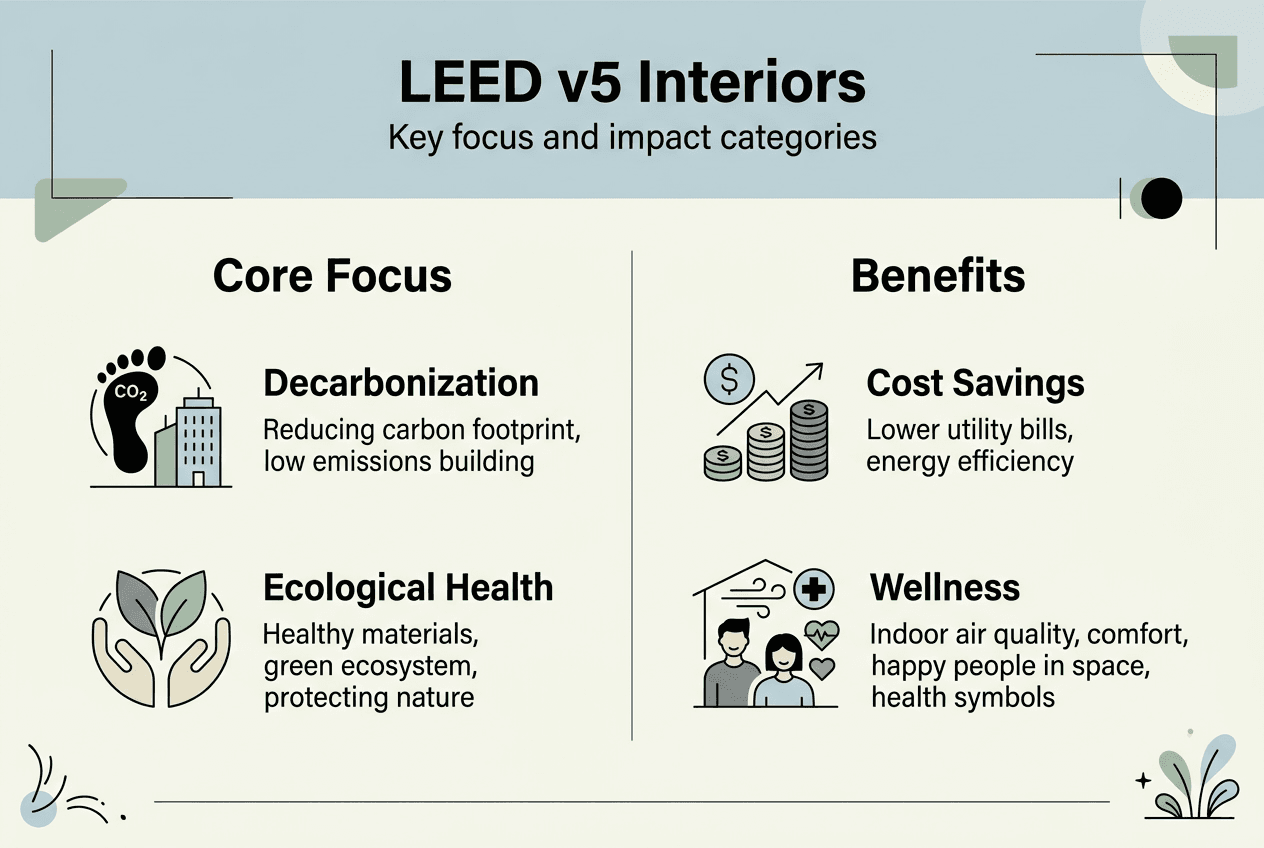
Certification validates design decisions through third-party verification. An independent reviewer examines documentation, confirming that implemented strategies meet LEED requirements. This rigorous process ensures credibility and provides clients with confidence that sustainability claims reflect actual performance.
Core components and prerequisites of LEED v5 for interiors
LEED v5 establishes mandatory prerequisites covering fundamental sustainability practices. These requirements ensure every certified project addresses critical environmental and health concerns. New prerequisites include climate resilience, social impact assessments, and occupant needs evaluations, expanding beyond traditional energy and water metrics.
The LEED v5 scorecard organizes credits into impact categories:
- Integrative Process: Early collaboration among stakeholders to identify synergies and optimize design strategies
- Location and Transportation: Access to transit, alternative transportation infrastructure, and reduced parking footprints
- Water Efficiency: Fixture performance, metering systems, and water use reduction strategies
- Energy and Atmosphere: Energy performance improvements, renewable energy procurement, and refrigerant management
- Materials and Resources: Sustainable sourcing, waste diversion, product transparency, and circular economy principles
- Indoor Environmental Quality: Air quality monitoring, thermal comfort, acoustic performance, and daylight access
| Impact Category | Primary Focus | Weight in v5 |
|---|---|---|
| Decarbonization | Operational and embodied carbon reduction | Highest |
| Human Health | Air quality, thermal comfort, lighting | High |
| Ecosystem Protection | Material sourcing, habitat conservation | Medium |
| Social Equity | Accessibility, community engagement | Medium |
| Water Conservation | Fixture efficiency, monitoring | Medium |
Decarbonization receives the heaviest weighting in LEED v5, reflecting urgent climate priorities. Interior projects contribute by specifying low-carbon materials, maximizing energy efficiency, and sourcing renewable energy. Even without controlling building systems, interior designers influence carbon footprints through material selection and operational efficiency strategies.
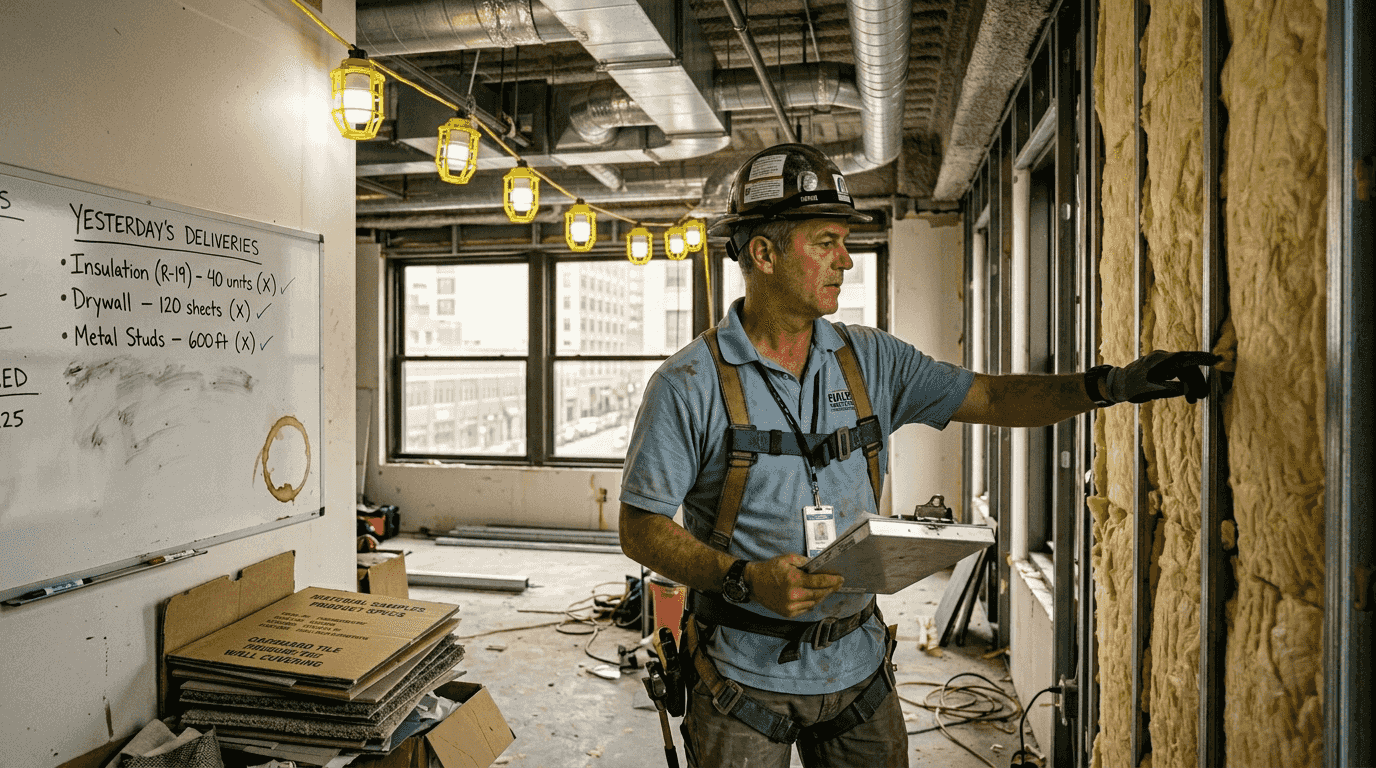
New credits address ecological conservation by rewarding projects that protect sensitive habitats and restore degraded sites. Social equity credits recognize projects that engage diverse stakeholders, provide accessible design, and support community health. These additions reflect LEED’s evolution toward holistic sustainability encompassing environmental, social, and economic dimensions.
Pro Tip: Engage your project team early in the integrative design process. Identifying LEED goals during schematic design maximizes opportunities for cost-effective strategies and prevents expensive retrofits later.
The LEED v5 reference guides provide detailed credit requirements, calculation methods, and documentation templates. These resources help teams navigate complex criteria and develop compliant submittals. Understanding prerequisites and credit structures enables strategic planning that aligns project priorities with certification goals.
LEED v5’s multi-attribute product framework and achieving certification levels
Product selection significantly impacts LEED v5 scores through the Building Product Selection and Procurement (BPSP) framework. This system evaluates products across five criteria areas: human health, climate health, ecosystem health, social health and equity, and circular economy. LEED v5 product evaluation requires comprehensive documentation demonstrating performance across multiple sustainability dimensions.
Products qualify for three achievement levels based on documented attributes:
| Achievement Level | Requirements | Credit Multiplier |
|---|---|---|
| Level 1 | Basic third-party certification or declaration | 1x |
| Level 2 | Enhanced certifications across multiple criteria | 2x |
| Level 3 | Highest performance standards in all five areas | 3x |
Higher achievement levels multiply credit values, accelerating point accumulation. A Level 3 product contributes three times the points of a Level 1 product, incentivizing selection of materials with superior sustainability profiles. This structure rewards manufacturers investing in comprehensive environmental and social performance.
Designers must balance product performance, cost, and availability when pursuing higher achievement levels. Level 3 products often carry premium pricing but deliver substantial point advantages. Strategic specification of key materials at higher levels, combined with broader use of Level 1 products, optimizes budget allocation while maximizing LEED scores.
Certification levels depend on total points earned:
- Certified: 40-49 points
- Silver: 50-59 points
- Gold: 60-79 points
- Platinum: 80+ points
Platinum certification demands exceptional performance across all categories. Projects typically require full electrification, substantial renewable energy procurement, and significant embodied carbon reductions. Interior projects achieving Platinum demonstrate industry-leading sustainability practices and serve as models for the profession.
Pro Tip: Create a material tracking spreadsheet early in design development. Document achievement levels for all specified products to monitor point accumulation and identify opportunities for strategic upgrades that push your project into the next certification tier.
Understanding the point thresholds helps teams set realistic goals aligned with client budgets and project constraints. Some clients prioritize Gold certification for market positioning, while others pursue Platinum to demonstrate absolute commitment to sustainability. Clear goal-setting during project initiation guides decision-making throughout design and construction.
Real-world impact: benefits and examples of LEED-certified interiors
LEED-certified interiors improve efficiency through strategies that reduce utility consumption and operating costs. High-performance lighting systems with occupancy sensors cut electricity use by 30 to 40 percent compared to conventional designs. Low-flow plumbing fixtures reduce water consumption by similar margins. These efficiency gains translate directly into lower monthly expenses, improving building operating budgets and tenant satisfaction.
Enhanced indoor environmental quality supports occupant health, comfort, and productivity. Improved ventilation rates and air filtration remove pollutants and allergens. Access to daylight and views reduces eye strain and supports circadian rhythms. Acoustic treatments minimize distracting noise. Research consistently shows that occupants in high-performance spaces report fewer sick days, higher satisfaction, and improved cognitive function.
Sustainable material choices reduce embodied carbon while supporting circular economy principles. Specifying salvaged materials, recycled content products, and rapidly renewable resources minimizes environmental impact. End-of-life planning ensures materials can be recovered and reused rather than landfilled. These strategies align with growing client demand for carbon accountability and waste reduction.
The AON fit-out case study demonstrates practical application of LEED principles in a commercial office environment. The project reused 30 percent of existing furniture, avoiding embodied carbon from new manufacturing. Designers integrated LEED and WELL certification frameworks to address both environmental performance and occupant wellbeing. This holistic approach delivered measurable sustainability outcomes while creating a healthy, productive workplace.
Key strategies in successful LEED interior projects include:
- Conduct a comprehensive existing conditions assessment to identify reuse opportunities
- Establish clear sustainability goals and metrics during programming
- Engage specialty consultants for lighting design, acoustics, and indoor air quality
- Specify products with verified environmental attributes and third-party certifications
- Implement construction waste management plans achieving 75 percent diversion rates
- Install monitoring systems tracking energy, water, and indoor air quality performance
The Nine Penang Road LEED Platinum case showcases innovative strategies achieving top-tier certification in a tropical climate. Designers maximized natural ventilation, specified locally sourced materials, and integrated biophilic design elements. The project demonstrates that Platinum certification is achievable across diverse climates and building types when teams commit to rigorous sustainability practices.
“LEED certification transforms how we approach interior design. It provides a clear framework for decision-making and validates our commitment to creating spaces that benefit both people and planet.”
Professionals report that LEED certification enhances their competitive positioning. Clients increasingly request sustainable design expertise, and certification demonstrates proven capability. The structured documentation process also improves project management, creating clear accountability and reducing miscommunication among team members.
Explore professional LEED consulting and interior design support
Navigating LEED v5 requirements demands specialized knowledge and experience. Professional consultants streamline the certification process by identifying efficient pathways to point accumulation, managing documentation requirements, and coordinating third-party reviews. Their expertise helps design teams avoid common pitfalls that delay certification or require expensive corrections.
Integrative design facilitation brings stakeholders together early to align sustainability goals with project priorities. Consultants guide collaborative workshops that identify synergies between systems, optimize resource allocation, and establish clear responsibilities. This proactive approach prevents conflicts and ensures sustainability remains central throughout design and construction.
Specialized support helps teams meet LEED v5’s expanded criteria efficiently. Consultants stay current on evolving requirements, approved calculation methods, and documentation best practices. They translate complex technical requirements into actionable strategies that fit project budgets and schedules. Whether pursuing Certified or Platinum, expert guidance maximizes success while minimizing team stress. Explore how Ron Blank & Associates can support your next sustainable interior project with tailored LEED consulting services.
What is the difference between LEED for Interiors and LEED for entire buildings?
LEED for Interiors, formally called Interior Design and Construction (ID+C), certifies tenant spaces and commercial interiors rather than entire buildings. It focuses on elements under tenant or interior designer control, including finishes, furniture, lighting, and plumbing fixtures. Building envelope and core systems like HVAC typically fall outside the scope. This targeted approach makes certification accessible for projects where designers lack authority over whole-building systems, enabling sustainability achievements within tenant improvement constraints.
How does the new LEED v5 emphasize decarbonization in interior projects?
Decarbonization represents the most weighted impact area in LEED v5, reflecting urgent climate priorities. Interior projects must reduce operational carbon through energy efficiency measures and renewable energy procurement. Embodied carbon reduction requires specifying low-carbon materials, maximizing reuse, and selecting products with environmental declarations. Even without controlling building systems, interior designers significantly influence carbon footprints through strategic material selection and operational efficiency strategies.
What are some key benefits of LEED certification for interior spaces?
LEED-certified interiors deliver multiple tangible benefits for building owners and occupants. Energy and water efficiency measures reduce utility costs by 20 to 40 percent compared to conventional designs. Enhanced indoor environmental quality improves occupant health, comfort, and productivity through better air quality, lighting, and acoustic performance. Sustainable material choices reduce environmental impact while supporting circular economy principles. Certification also provides market differentiation, demonstrating commitment to environmental responsibility and meeting growing tenant demand for sustainable spaces.
How long does the LEED certification process take for interior projects?
Timelines vary based on project complexity, team experience, and documentation completeness. Typical interior projects require six to twelve months from registration to final certification. Early engagement with LEED goals during design development accelerates the process by ensuring strategies align with requirements from the start. Experienced teams with robust documentation systems often achieve faster timelines. Delays commonly occur when teams must revise submittals due to incomplete information or non-compliant strategies, emphasizing the value of early planning and expert guidance.