

Every architect and interior designer knows how challenging it can be to balance project deadlines with ongoing education. Staying competitive means embracing flexible ways to sharpen skills and earn professional development credits. Webinars open new doors, offering convenient access to expert content, real-time interaction, and valuable AIA CE courses without travel. By understanding both core benefits and common misconceptions, design professionals can confidently use webinars to accelerate their growth and stay ahead of emerging industry trends.
Table of Contents
- Webinars For Designers: Core Benefits And Misconceptions
- Types Of Design Webinars And Credit Structures
- How Webinars Enhance Skills And Industry Knowledge
- Fulfilling AIA CE Requirements Through Webinars
- Networking, Product Insights, And Real-World Applications
- Comparing Webinars To In-Person And On-Demand Courses
Key Takeaways
| Point | Details |
| Flexibility of Webinars | Webinars provide convenient, remote learning options that fit around professional commitments, making it easier for designers to engage in continuous education. |
| Engagement in Learning | Active participation in webinars, such as asking questions and avoiding multitasking, enhances learning retention and professional growth. |
| Variety of Formats | Different webinar types cater to various professional needs, allowing designers to choose based on their learning preferences and requirements. |
| Networking Opportunities | Webinars enable global networking and direct interactions with industry experts, enhancing career development through meaningful connections. |
Webinars for Designers: Core Benefits and Misconceptions
Designers today face an evolving professional landscape where continuous learning is not just recommended, but essential. Professional development through webinars has emerged as a powerful alternative to traditional in-person training, offering unprecedented flexibility and accessibility for architecture and interior design professionals.
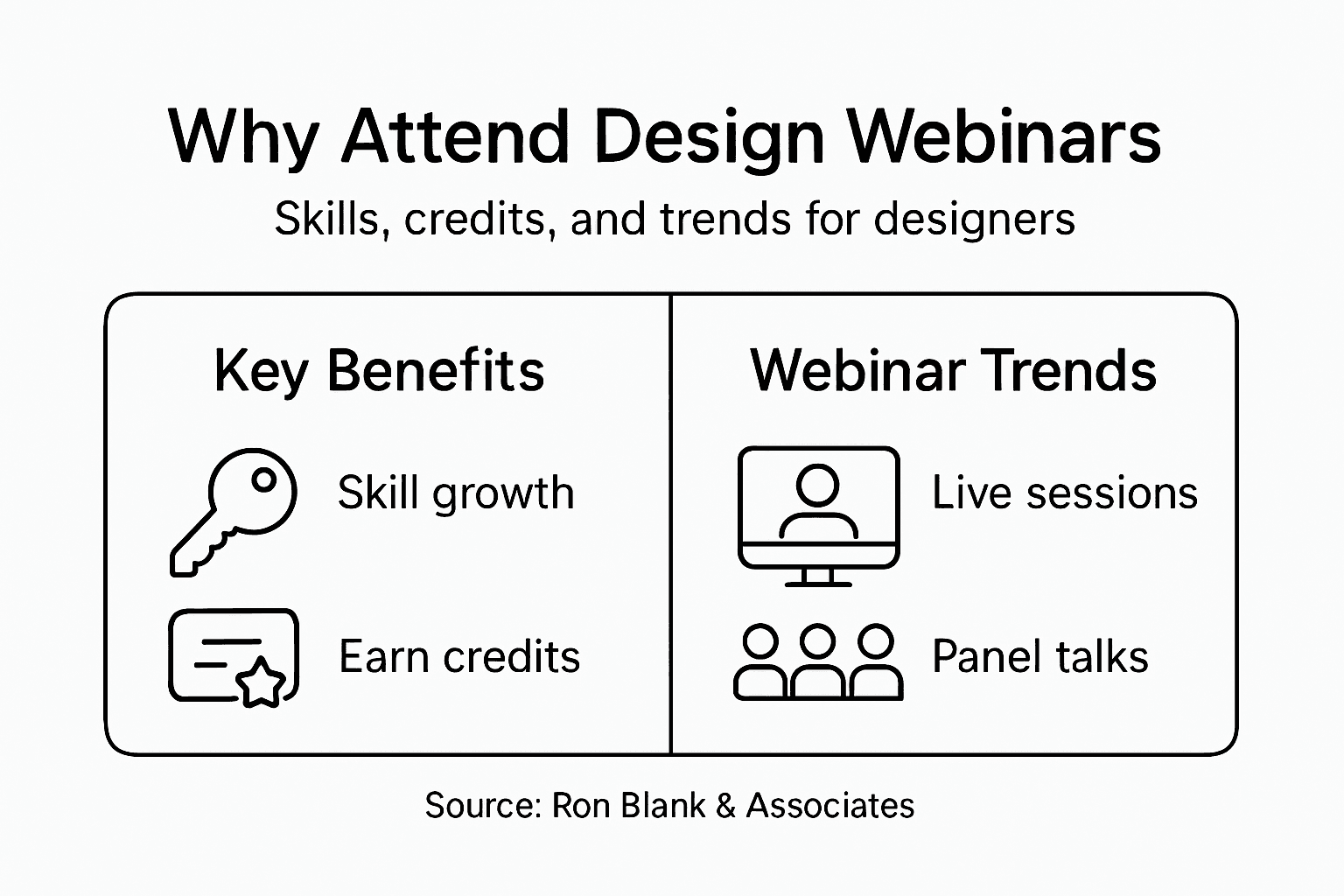
Webinars provide remarkable advantages for design professionals, especially those seeking convenient learning options. Interactive learning opportunities enable designers to engage with expert content from anywhere with an internet connection. The key benefits include:
- Convenience of remote participation
- Real-time interaction with industry experts
- Ability to learn without travel expenses
- Flexible scheduling around work commitments
- Access to global design perspectives
Many designers harbor misconceptions about webinar effectiveness. Contrary to popular belief, well-structured webinars can be highly engaging and information-dense. Professional development sessions are not passive experiences but dynamic learning environments that challenge traditional training models.
The effectiveness of webinars depends significantly on design and delivery. Participants can maximize their experience by actively engaging, taking notes, and asking questions during live sessions. Avoiding multitasking and treating webinars as serious professional development opportunities ensures meaningful learning.
Pro tip: Schedule dedicated, distraction-free time for webinar participation to enhance your learning retention and professional growth.
Types of Design Webinars and Credit Structures
Design professionals have multiple webinar formats available to support their continuous learning and professional development needs. Various webinar types cater to different learning styles and professional requirements, offering flexibility in how designers acquire new knowledge and skills.
The primary types of design webinars include:
- Live Webinars: Real-time interactive sessions with direct expert engagement
- On-Demand Webinars: Pre-recorded sessions accessible anytime
- Panel Discussions: Multiple experts sharing diverse perspectives
- Product Demonstration Webinars: Technical showcases of design tools and technologies
- Q&A Sessions: Focused opportunities for direct professional inquiry
Continuing Education Unit (CEU) structures vary significantly across different professional organizations. Professional design organizations provide accredited webinars that help designers meet certification and licensing requirements. These structured educational experiences typically offer credit allocations based on:
- Session duration
- Content complexity
- Professional relevance
- Specific industry standards
Design professionals must carefully review credit requirements for their specific professional certifications. Some organizations require precise documentation of participation, while others may have more flexible credit recognition policies. Understanding these nuanced credit structures helps professionals strategically plan their ongoing education.
Here’s a clear summary showing how each webinar format matches different professional needs:
| Webinar Type | Best For | Interaction Level | Scheduling Flexibility |
| Live Webinar | Real-time Q&A and feedback | High | Set schedule |
| On-Demand Webinar | Self-paced study | Low | Maximum flexibility |
| Panel Discussion | Comparing expert opinions | Medium | Live or recorded |
| Product Demo | Exploring new tools | Medium | Varies |
| Q&A Session | Addressing specific queries | High | Often live only |
Pro tip: Maintain a detailed log of webinar attendance and acquired credits to streamline your professional development tracking and certification maintenance.
How Webinars Enhance Skills and Industry Knowledge
Design professionals increasingly recognize webinars as powerful tools for continuous skill development and industry knowledge expansion. Cutting-edge design webinars offer unprecedented opportunities to learn directly from industry leaders and stay current with rapidly evolving design practices.
The key skills and knowledge areas enhanced through webinars include:
- Strategic Design Thinking: Advanced frameworks for solving complex design challenges
- Technical Proficiency: Emerging software tools and design technologies
- Industry Trends: Insights into current and future design methodologies
- Specialized Techniques: Focused skill development in specific design domains
- Cross-disciplinary Knowledge: Understanding intersections between design and other fields
Professional Development through webinars goes beyond traditional learning methods. Online learning platforms provide designers with research-backed content that bridges theoretical knowledge and practical application. These educational experiences enable professionals to:
- Quickly adapt to technological innovations
- Gain insights from global design experts
- Explore emerging design methodologies
- Challenge existing design paradigms
- Develop a more comprehensive professional perspective
Webinars represent a dynamic approach to continuous learning, allowing designers to remain competitive in an increasingly complex and technology-driven professional landscape. By strategically selecting webinars aligned with their career goals, designers can systematically expand their skill set and industry understanding.

Pro tip: Create a personal learning roadmap by identifying skill gaps and selecting webinars that strategically address those specific areas of professional development.
Fulfilling AIA CE Requirements Through Webinars
Architects seeking to maintain their professional AIA membership must carefully navigate continuing education requirements set by the American Institute of Architects (AIA). Design webinars accredited for professional development offer a flexible and efficient pathway to meeting these mandatory CE credit obligations.
The key considerations for fulfilling AIA CE requirements through webinars include:
- Accreditation Verification: Confirm the webinar is AIA-approved
- Credit Documentation: Maintain detailed records of participation
- Content Relevance: Select webinars aligned with professional development goals
- Credit Hour Tracking: Monitor progress toward required CE hours
- Compliance Deadlines: Stay aware of annual renewal requirements
Specialized Training Topics that typically qualify for AIA CE credits encompass:
- Sustainable design practices
- Building code updates
- Accessibility standards
- Inclusive design techniques for professional practice
- Technological innovations in architecture
- Regulatory compliance and safety standards
Successful architects understand that continuing education is not just a regulatory requirement, but an opportunity for professional growth. By strategically selecting high-quality webinars, design professionals can simultaneously fulfill licensing requirements and expand their knowledge base, ensuring they remain competitive and current in a rapidly evolving industry.
Pro tip: Create a digital folder to store webinar certificates and track CE credits systematically, ensuring you never miss your professional development requirements.
Networking, Product Insights, and Real-World Applications
Webinars have transformed from passive learning experiences into dynamic platforms for professional connection and industry exploration. Professional design organizations now leverage virtual events to create unprecedented networking opportunities for designers across geographic boundaries.
The key networking and insight benefits of design webinars include:
- Direct Expert Interaction: Immediate Q&A with industry leaders
- Global Professional Connections: Networking beyond local limitations
- Vendor Product Demonstrations: First-hand insights into emerging technologies
- Case Study Exploration: Real-world design problem-solving strategies
- Collaborative Learning Environments: Interactive knowledge exchange
Professional Networking Strategies during webinars can significantly enhance career development. Design webinar interactive segments offer multiple engagement opportunities such as:
- Live chat functions
- Interactive polling
- Post-presentation discussion forums
- Speaker contact information sharing
- Virtual breakout rooms
Successful designers view webinars as more than educational experiences—they are strategic career development platforms. By actively participating, asking insightful questions, and connecting with presenters and fellow attendees, professionals can transform passive learning into meaningful professional growth opportunities.
Pro tip: Prepare targeted questions before each webinar and connect with speakers and participants on professional networking platforms to maximize your networking potential.
Comparing Webinars to In-Person and On-Demand Courses
Design professionals today face multiple learning formats, each with distinct advantages and limitations. Comprehensive learning strategies require understanding the nuanced differences between webinars, in-person courses, and on-demand training options.
Key comparative characteristics include:
- Accessibility: Webinars offer global participation
- Cost Efficiency: Lower expenses compared to in-person training
- Time Flexibility: On-demand courses provide maximum scheduling freedom
- Interactive Potential: Live webinars enable real-time engagement
- Networking Opportunities: Varied across different learning formats
Learning Format Comparison:
- In-Person Courses:
- Maximum personal interaction
- Direct networking opportunities
- High-cost travel and attendance
- Fixed scheduling requirements
- Webinars:
- Moderate interactivity
- Global accessibility
- Lower cost
- Real-time learning experience
- On-Demand Courses:
- Maximum personal scheduling flexibility
- Self-paced learning
- Limited interaction
- Potential reduced engagement
Technical learning considerations reveal that webinars represent a strategic middle ground, balancing convenience with interactive learning potential. Designers can leverage each format’s unique strengths to create a comprehensive professional development strategy.
This comparison outlines how webinars, in-person, and on-demand courses differ for design professionals:
| Feature | Webinars | In-Person | On-Demand |
| Cost | Lower cost | Higher fees | Varies, often affordable |
| Networking | Global reach | Local, personal | Very limited |
| Engagement | Moderately high | Very high | Lower |
| Pace | Fixed or semi-flexible | Fixed | Fully self-paced |
Pro tip: Develop a blended learning approach by combining different course formats to maximize educational diversity and skill acquisition.
Elevate Your Design Career with Accredited Online Learning
The article highlights the crucial challenge designers face in balancing busy schedules while meeting professional development requirements like AIA continuing education credits. If you aim to advance your skills in strategic design, stay current on industry trends, and efficiently earn CE credits without sacrificing valuable time, you need flexible and expert-led learning solutions tailored to your profession.
At Ron Blank, we specialize in developing AIA-registered continuing education courses designed for architects, interior designers, engineers, and contractors. Our engaging online courses and webinars offer the convenience of remote participation and the interaction that webinars promise. When you learn with us, you get the best of both worlds comprehensive professional knowledge and CE credit fulfillment.
Take control of your professional growth right now. Discover our extensive lineup of accredited webinars and courses to stay ahead in your career. Visit Ron Blank and explore the future of continuing education. Don’t wait until deadlines approach; start earning credits and expanding your expertise today.
Frequently Asked Questions
What are the main benefits of attending webinars for design professionals?
Attending webinars offers design professionals several key benefits, including the convenience of remote participation, real-time interaction with industry experts, reduced travel expenses, flexible scheduling, and diverse global perspectives in design.
How do webinars help in fulfilling continuing education requirements?
Webinars can help design professionals fulfill continuing education requirements by providing accredited sessions that offer Continuing Education Units (CEUs). These credits often cater to the specific needs set by professional organizations, such as maintaining licenses or certifications.
What types of content can I expect from design webinars?
Design webinars can cover a variety of content, including live presentations, panel discussions, product demonstrations, technical showcases, and on-demand sessions. This variety allows designers to select formats that best suit their learning preferences and professional needs.
How can I maximize my learning experience during a webinar?
To maximize your learning experience, actively engage with the content by taking notes, asking questions, and avoiding multitasking. Setting aside distraction-free time for participation can significantly enhance retention and professional growth.