

TL;DR:
- Contractors play a crucial role in product selection, influencing constructability, compliance, and project outcomes when involved early. Understanding specs, managing subcontractors effectively, and clarifying procurement responsibilities enhance influence and reduce costly disputes. Proactive communication and structured processes empower contractors to become trusted partners rather than just builders.
Most contractors assume product selection belongs to the architect. You execute the vision, they pick the materials. That mental model is costing you money, time, and influence you’ve already earned. The role of contractors in product selection is far more consequential than the traditional division of labor suggests, and contractors who understand this are consistently delivering better projects. They catch problems before they become change orders, they protect schedules, and they build the kind of collaborative relationships with design teams that lead to repeat work.
Table of Contents
- Key Takeaways
- The role of contractors in product selection starts with timing
- Understanding construction specifications
- Subcontractor selection and its impact on product performance
- Managing procurement responsibility between contractors and designers
- Practical steps to strengthen your influence
- My perspective on contractors and product selection
- How Ronblank supports your product selection process
- FAQ
Key Takeaways
| Point | Details |
|---|---|
| Timing determines influence | Contractors involved during feasibility and schematic phases shape product decisions before they get locked in. |
| Specs are contract documents | Understanding spec structure helps contractors verify compliance, manage substitutions, and avoid costly disputes. |
| Subcontractor selection affects products | Who you hire to install a product directly affects whether that product performs as specified. |
| Procurement lanes must be defined | Unclear purchasing responsibility creates liability gaps and uncompensated labor for all parties. |
| Proactive coordination reduces risk | Pre-bid spec-to-drawing checks and early communication protect both budget and design intent. |
The role of contractors in product selection starts with timing
Here is the blunt truth: by the time most contractors get involved in a project, roughly 80 percent of product-related decisions are already made. That is not a coincidence. It is a structural problem with how the industry traditionally sequences design and construction. Contractors who understand this dynamic work to change it.
Early contractor involvement in feasibility and schematic phases enables real influence on constructability, sequencing, and system constraints while decisions are still flexible. That window matters enormously. A mechanical contractor who flags a conflict between a specified HVAC unit and available ceiling height during design saves everyone the headache of a last-minute substitution request during construction.
The risks of late involvement compound quickly. Rework increases. Change orders multiply. And the contractor who was brought in too late often absorbs the costs of decisions made without their input. Compare that to a preconstruction engagement model where coordination with subcontractors and material availability assessments happen before drawings are finalized.
- Early involvement (feasibility and schematic): Opportunity to flag constructability issues, assess lead times, and recommend alternative products before specs are locked
- Design development phase: Contractor input on sequencing, coordination drawings, and spec language while changes are still relatively low-cost
- Construction documents phase: Review of final specs and drawings to identify contradictions before bidding
- Construction phase: Limited influence, high cost of change
Pro Tip: If you are brought in during construction documents or later, request a pre-bid meeting with the design team specifically to review Part 2 and Part 3 of the project specs. That one conversation often surfaces conflicts that would otherwise become change orders.
Understanding construction specifications
Construction specifications are not just reference documents. They are legally binding contract documents, and your obligations under them are specific and enforceable. Specs detail product requirements, installation methods, and quality standards in a three-part structure: Part 1 General covers administrative requirements, submittals, and closeout procedures; Part 2 Products defines acceptable manufacturers, materials, and fabrication; Part 3 Execution addresses installation, field quality control, and protection.
Most contractors read drawings more fluently than specs. That gap creates real exposure. A drawing may show a wall assembly, but the spec is what defines the exact fire-rated assembly, the approved manufacturer, and the required installation method. If your subcontractor installs a product that meets the drawing but not the spec, you own the correction.
Contractors also reduce substitution disputes by focusing on the Part 2 sections that define acceptable manufacturers and field verification processes. When you understand exactly what the spec permits, you can evaluate substitution requests from subcontractors with confidence rather than passing everything up to the architect.
| Spec section | What it covers | Contractor responsibility |
|---|---|---|
| Part 1 General | Submittals, warranties, closeout | Submit required documentation on time and in correct format |
| Part 2 Products | Manufacturers, materials, fabrication standards | Verify all specified products are compliant before ordering |
| Part 3 Execution | Installation methods, quality control | Confirm installer qualifications and inspection requirements |
Pro Tip: Before signing a contract, compare the spec sections against the drawings for every major system. Conflicts between the two documents are where cost overruns hide. Finding them before you bid is free. Finding them during construction is expensive.
Subcontractor selection and its impact on product performance
Your subcontractor network is one of your most direct levers of contractor influence in procurement, and most contractors underuse it. Selecting subcontractors based on availability or low bids increases the risks of rework, safety incidents, and project delays. The subcontractor who wins on price but lacks product-specific installation experience becomes your liability.
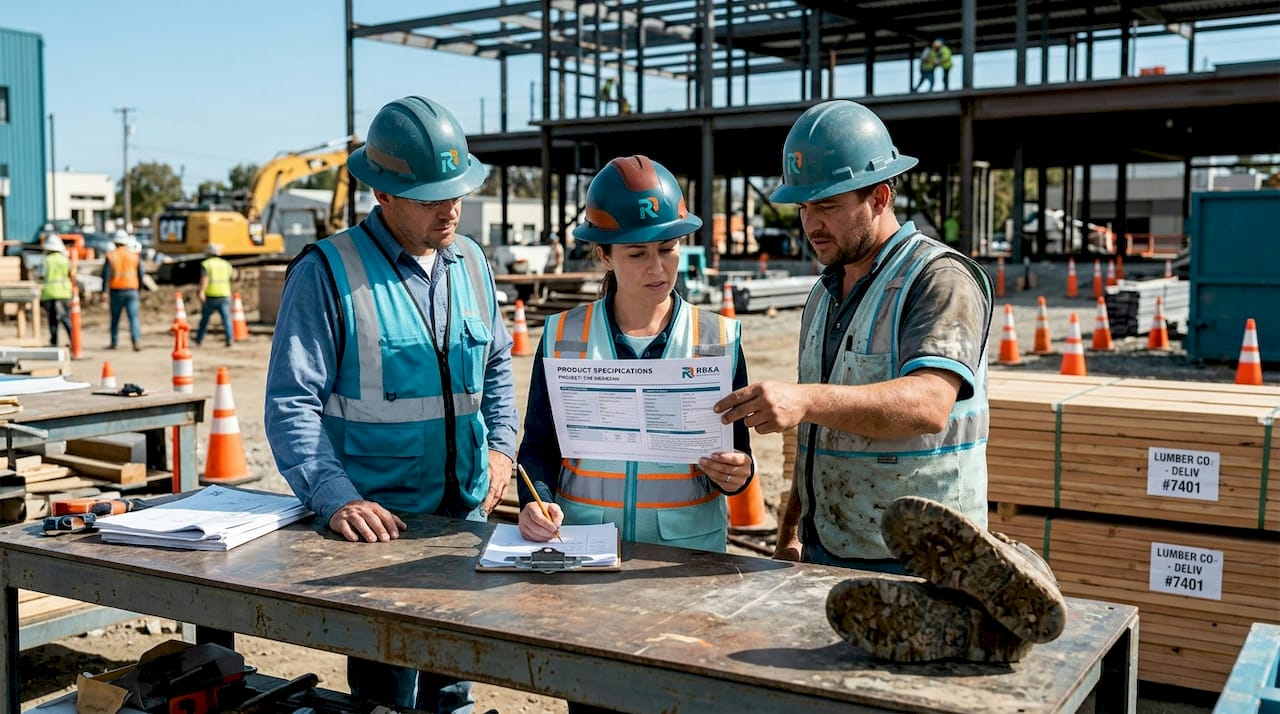
The connection between subcontractor selection and product performance is direct. A waterproofing product may be specified and procured correctly, but if the sub installing it has never worked with that system, the product fails in the field. You, as the general contractor, absorb that claim.
Strong prequalification practices protect you from that outcome. They also improve schedule reliability, which directly affects the client relationship and your reputation. Prequalification is not bureaucracy. It is contractor role in sourcing done correctly.
- Prequalify subs on product-specific experience, not just trade category
- Review manufacturer installation certifications for specialty systems (roofing, waterproofing, curtain wall)
- Conduct structured onboarding that communicates spec requirements before work begins
- Use pre-installation meetings with both the sub and the product rep to align on installation sequencing
- Document all approvals and field decisions to protect against substitution-related claims
Subcontractor status under FAR is defined by the performance nexus to the prime contract’s statement of work, not by the label on a purchase order. Understanding that distinction matters when accountability for product compliance is in question.
Managing procurement responsibility between contractors and designers
One of the most underappreciated sources of project conflict is the gap between who specifies a product and who purchases it. These are two different responsibilities with two different sets of liability, and when they get blurred, everyone loses. Unclear purchasing responsibility leads to substitution disputes, confusion over compliance, and uncompensated labor.
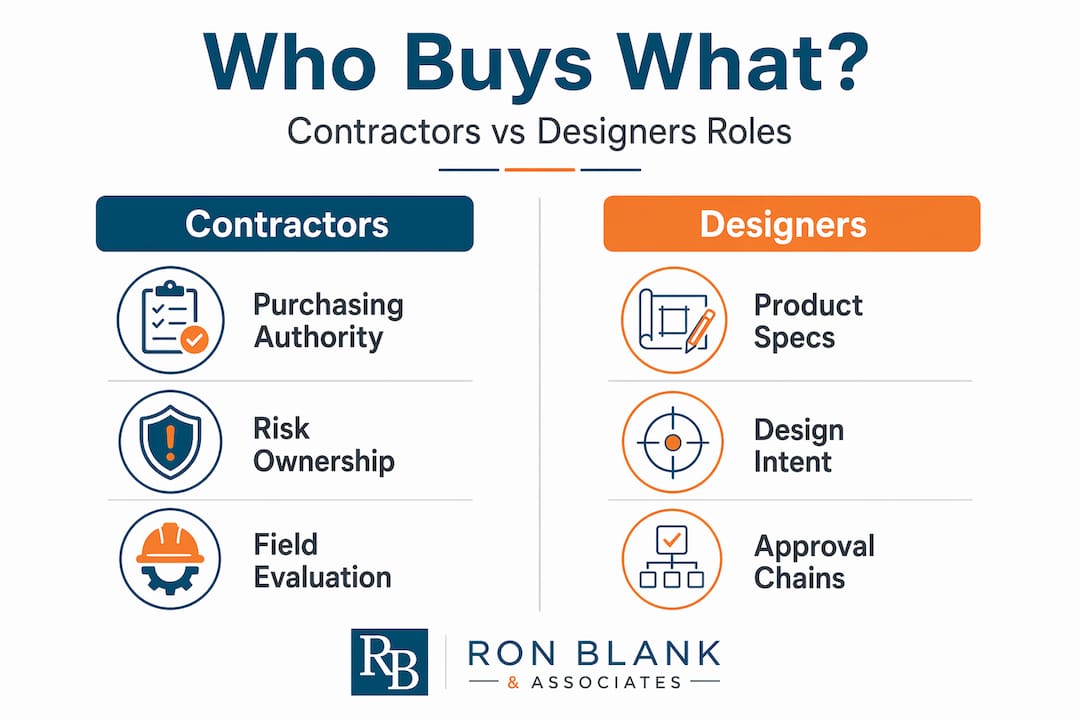
The practical issue arises when a GC takes over purchasing authority from the design team without a corresponding shift in contractual accountability. The GC handles the procurement logistics, but the architect still carries liability for performance. Neither party has full clarity, and the product sits in the middle of a finger-pointing dispute.
| Scenario | Who purchases | Risk if undefined |
|---|---|---|
| GC procures specified product | Contractor | Liability for compliance and delivery timing |
| Designer procures owner-furnished product | Designer/Owner | Coordination gaps with contractor’s schedule |
| GC substitutes specified product | Contractor | Design liability exposure without formal approval |
| Shared procurement without defined lanes | Both | Disputes, delays, and unresolved accountability |
Formal procurement lanes established in contracts and reflected in responsibility matrices prevent profit shifting and unresolved liability when purchasing control changes hands. This is best practices for contractor product selection applied at the contract level. Spell it out before the project starts, not after the first substitution request creates a conflict.
Pro Tip: Add a procurement responsibility matrix to your project startup checklist. One page that maps each major product category to the purchasing party, the approval process, and the compliance verification step will save you far more than the hour it takes to create.
Practical steps to strengthen your influence
Most contractors know they should be more involved in product decisions. Fewer have a structured method for making it happen. These five practices will improve both your influence and your outcomes:
- Request early design team access. Ask during contract negotiations for involvement at feasibility or schematic stages. Frame it around constructability review and value engineering. Design teams who have worked with proactive contractors welcome this, and those who haven’t will quickly see the value.
- Conduct a pre-bid spec-to-drawing coordination check. Spec-to-drawing coordination led by contractors before bidding reduces risk by identifying contradictions and unclear specs. This process is how contractors aid product choice by catching conflicts before they become cost overruns.
- Clarify procurement responsibilities before contract execution. Use a responsibility matrix to define who purchases, who approves substitutions, and who carries compliance liability for each product category. Do not leave this to verbal agreements.
- Build a structured subcontractor onboarding process. Every sub on a project should receive a spec summary for their scope before mobilization. This single step reduces substitution requests, field deviations, and installation errors from subcontractors who never read the project manual.
- Communicate product approvals in writing, every time. When the design team approves a substitution or a product alternate, confirm it in an RFI or submittal response before ordering. A verbal approval that disappears during a dispute is no approval at all. Collaborative specification processes involving contractors and design teams lead to better outcomes and fewer disputes, but that collaboration only holds up when it is documented.
My perspective on contractors and product selection
I’ve watched this dynamic play out on projects for years, and the pattern is consistent. Contractors who think of themselves as executors get treated as executors. Those who show up with spec knowledge, product awareness, and a point of view on constructability get treated as partners. The difference in how those projects run is not subtle.
What I’ve found is that the traditional model of “architect specifies, contractor builds” was never as clean as it looked on paper. The architect often doesn’t know which products are actually available with a 16-week lead time during a supply chain crunch. The contractor does. The architect doesn’t always know which fireproofing system their preferred structural product is compatible with. The contractor’s steel sub does. That knowledge has value, and contractors who don’t find a way to contribute it early are leaving real influence on the table.
The importance of contractors in selection becomes most visible when something goes wrong. When a product fails or a substitution spirals into a dispute, everyone looks for who should have caught it. What I’ve learned is that contractors who build early review processes and document their contributions to product decisions are far better protected, and far more respected, when that moment comes. The goal is to be the voice in the room before the problem, not the person explaining yourself after it.
— Brad
How Ronblank supports your product selection process

At Ronblank, we work with contractors, architects, engineers, and building product manufacturers to close the knowledge gaps that cause exactly the problems this article describes. Our continuing education courses are registered with the American Institute of Architects and cover specification literacy, procurement management, and collaborative project delivery. We deliver them as online courses, webinars, podcasts, and face-to-face sessions, so you can fit professional development into the way you actually work.
If you want to sharpen your understanding of construction specifications, build stronger collaboration with design teams, or simply get more confident in product-related conversations, explore our resources at Ronblank. We also work directly with building product manufacturers to get their products specified, which means we understand the full picture from design intent to field installation. Reach out and let’s talk about where the gaps are in your current process.
FAQ
What is the role of contractors in product selection?
Contractors contribute to product selection by identifying constructability issues, verifying spec compliance, managing substitution requests, and coordinating subcontractor capabilities. Their influence is greatest when they are involved during early design phases before products are locked in.
When should a contractor get involved in product decisions?
Contractors add the most value during feasibility and schematic design, when product decisions are still flexible and changes carry low cost. Involvement during construction documents is still useful for catching spec-to-drawing conflicts before bidding.
How do construction specs define contractor responsibilities?
Construction specifications are legally binding documents divided into Part 1 General, Part 2 Products, and Part 3 Execution. Contractors are responsible for verifying product compliance, submitting required documentation, and confirming that installation meets the specified methods and quality standards.
How does subcontractor selection affect product outcomes?
Choosing subcontractors without evaluating product-specific installation experience increases the risk of field failures, rework, and claims. A sub who wins on price but lacks hands-on experience with a specified system creates liability that falls on the general contractor.
What is the best way to manage procurement responsibility on a project?
The most effective approach is to define procurement lanes in the contract before work begins, mapping each major product category to the purchasing party and compliance verification process. Matching purchasing authority to accountability prevents disputes and protects all parties when substitutions arise.