

Staying licensed as an architect takes more than skill. Keeping up with mandatory continuing education is non-negotiable. Every renewal cycle, architects must complete hours of coursework. Accessible online courses make meeting these requirements easier, helping professionals strengthen expertise in inclusive and sustainable design while fulfilling AIA credit obligations.
Table of Contents
- Continuing Education Defined for Architects
- Types of AIA, GBCI, and IDCEC Courses
- How Continuing Education Credits Work
- Meeting ADA and ZNCD Requirements
- Impact on Career Growth and Licensure
Key Takeaways
| Point | Details |
| Continuing Education is Essential | Architects must complete continuing education to maintain licensure and stay updated on industry standards and innovations. |
| Credit Requirements Vary by Jurisdiction | Most states require between 12 to 36 continuing education hours every three years, focusing on health, safety, and welfare topics. |
| Diverse Learning Platforms Available | Organizations like AIA, GBCI, and IDCEC offer specialized courses tailored to different aspects of architecture and design. |
| Career Growth and Compliance Benefits | Continuing education enhances marketability, ensures legal compliance, and opens opportunities for leadership roles and specialized certifications. |
Continuing Education Defined for Architects
Continuing education represents a critical professional requirement for architects to maintain their licensure and professional competence. Learning units in professional development enable architects to stay current with evolving industry standards, technological advancements, and best practices in design and construction.
Most jurisdictions mandate that architects complete a specific number of continuing education hours every licensing cycle. These educational requirements typically focus on health, safety, and welfare (HSW) topics that directly impact professional practice. Mandatory education hours ensure architects remain knowledgeable about current building codes, sustainable design principles, and emerging technologies that shape the built environment.
Continuing education courses can be completed through various formats, including online webinars, in-person workshops, conferences, and professional seminars. Architects must typically earn between 12 to 36 hours of continuing education credits every three years, depending on their state’s specific licensing requirements. These courses cover diverse subjects such as sustainable design, building performance, professional ethics, accessibility standards, and technological innovations.
Pro tip: Track your continuing education credits systematically using a digital portfolio or professional management platform to ensure you meet licensing renewal requirements well in advance of deadlines.
Types of AIA, GBCI, and IDCEC Courses
Architects have multiple professional development platforms that offer specialized continuing education courses, each with unique focuses and certification requirements. The American Institute of Architects (AIA), Green Business Certification Inc. (GBCI), and Interior Design Continuing Education Council (IDCEC) provide comprehensive learning opportunities across different professional domains.
AIA courses typically emphasize health, safety, and welfare (HSW) topics, covering critical areas such as building design standards, professional ethics, sustainable practices, and emerging architectural technologies. These courses range from online webinars to in-person workshops, allowing architects flexibility in meeting their professional development requirements.
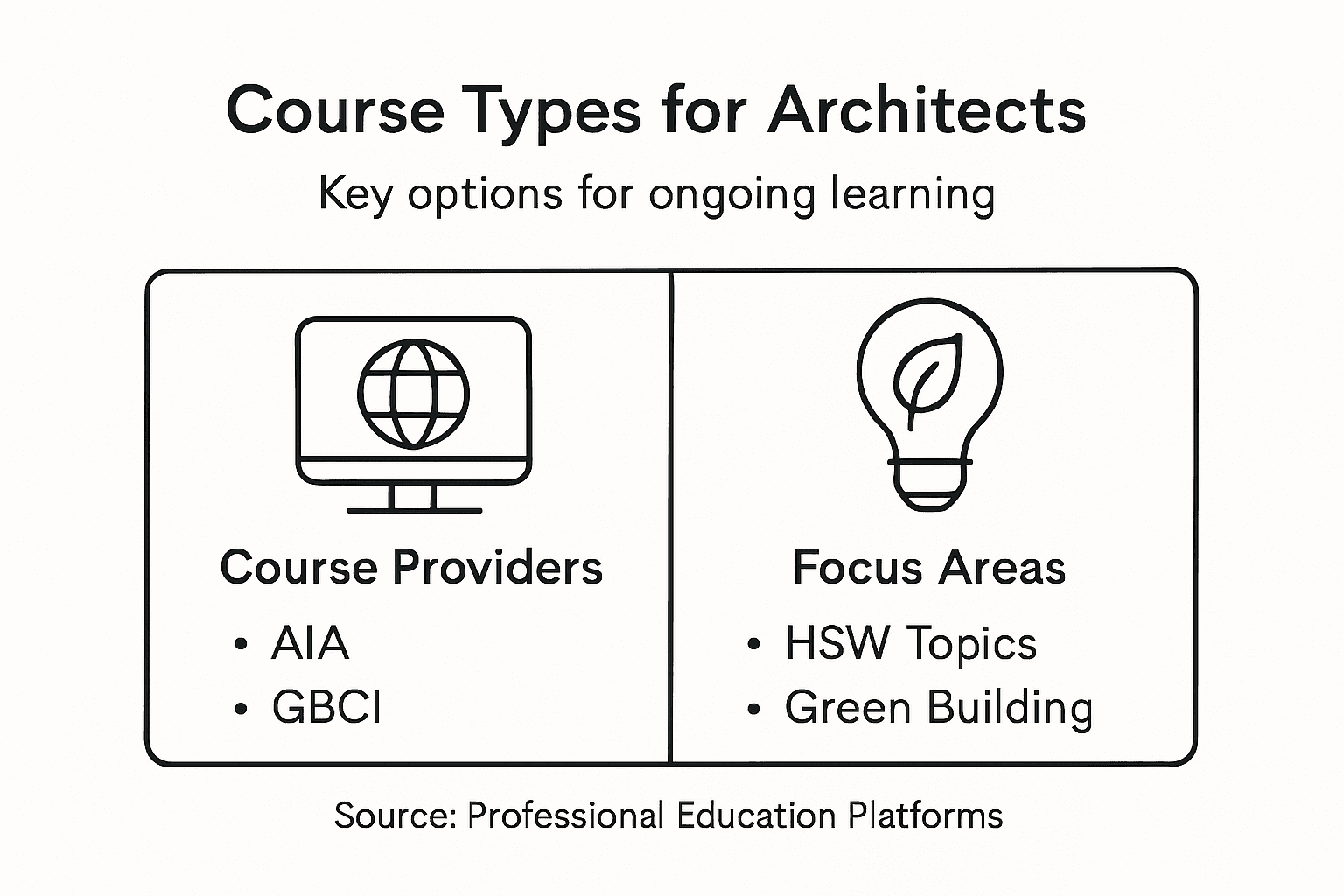
GBCI courses focus specifically on sustainability and green building practices, providing certifications like LEED (Leadership in Energy and Environmental Design) that validate an architect’s expertise in environmentally responsible design. The IDCEC offers specialized courses for interior designers, covering topics such as material specifications, color theory, spatial planning, and professional standards. These specialized courses ensure that design professionals remain updated on industry innovations, regulatory changes, and best practices.
Pro tip: Develop a strategic annual learning plan that balances mandatory continuing education requirements with courses that align with your specific professional interests and career development goals.
Here is a summary of major professional development platforms for architects and their unique focuses:
| Platform | Main Focus | Typical Course Topics |
| AIA | Health, Safety, Welfare | Building codes, ethics, technology |
| GBCI | Sustainability & Green Building | LEED, energy efficiency, renewable materials |
| IDCEC | Interior Design Standards | Materials, color theory, accessibility |
How Continuing Education Credits Work
Continuing education credits are the primary mechanism by which architects maintain and demonstrate their professional competence. Most jurisdictions require architects to earn a specific number of learning units or credits within each licensing renewal cycle, typically ranging from 12 to 36 hours annually. Architects must document their continuing education credits to ensure compliance with state licensing requirements.

These credits are typically categorized into specific areas of professional development, with a primary focus on health, safety, and welfare (HSW) topics. Professional organizations like the American Institute of Architects (AIA) and state licensing boards establish detailed guidelines for acceptable continuing education activities. Eligible learning experiences might include online webinars, in-person workshops, conference presentations, professional seminars, academic courses, and self-study programs that meet predefined educational standards.
The credit calculation process varies by jurisdiction, but most systems use a standardized measurement where one credit typically represents 50-60 minutes of educational engagement. Architects must carefully track their credits, maintaining detailed documentation such as course certificates, attendance records, and learning summaries. Some states require a specific proportion of credits to be dedicated to core professional development areas, ensuring that architects remain current with industry innovations, technological advancements, and evolving professional standards.
Pro tip: Develop a digital portfolio or spreadsheet to systematically track your continuing education credits, including course details, dates, and HSW category classifications to streamline your renewal process.
Meeting Disability Access and ZNCD Requirements
Architects in California face specific continuing education requirements focused on critical areas of professional practice, particularly accessibility and sustainable design. Continuing education mandates include specialized coursework addressing disability access compliance and Zero Net Carbon Design (ZNCD) principles, which are essential for creating inclusive and environmentally responsible architectural solutions.
The disability access requirements demand architects develop deep understanding of accessibility standards, ensuring buildings are designed to accommodate individuals with diverse physical abilities. These courses cover critical topics such as wheelchair accessibility, sensory accommodations, adaptive design strategies, and navigational considerations for people with different mobility challenges. Architects must complete five dedicated hours of coursework specifically addressing disability access requirements, helping them design spaces that are both functional and universally welcoming.
Zero Net Carbon Design (ZNCD) courses represent another crucial component of continuing education, focusing on sustainable architectural practices that minimize carbon emissions. These specialized courses explore strategies for energy-efficient building design, renewable energy integration, material selection, and carbon-neutral construction techniques. By mandating five hours of ZNCD education, regulatory bodies ensure architects remain at the forefront of environmental design, equipped with the latest knowledge to create buildings that significantly reduce carbon footprints and contribute to broader climate resilience efforts.
Pro tip: Select continuing education courses that offer practical case studies and hands-on design scenarios to maximize your learning and directly apply new accessibility and sustainability insights to your architectural projects.
Impact on Career Growth and Licensure
Continuing education serves as a critical catalyst for architectural career advancement, providing professionals with opportunities to expand their expertise and maintain competitive edge in a rapidly evolving industry. Ongoing professional development supports career growth by enabling architects to acquire new skills, stay current with emerging technologies, and demonstrate commitment to professional excellence.
Licensure maintenance represents another crucial aspect of continuing education, with most jurisdictions requiring architects to complete specific educational credits to renew their professional credentials. These requirements ensure that architects remain knowledgeable about current building codes, safety standards, sustainable design principles, and technological innovations. By consistently engaging in professional development, architects can not only meet regulatory requirements but also position themselves for advanced career opportunities, including leadership roles, specialized practice areas, and potential national certification programs.
Beyond regulatory compliance, continuing education offers architects significant professional advantages. The knowledge gained through specialized courses enhances an architect’s marketability, allowing them to differentiate themselves in a competitive job market. Architects who actively pursue ongoing learning demonstrate adaptability, intellectual curiosity, and a commitment to delivering high-quality, innovative design solutions. This proactive approach to professional development can lead to expanded career opportunities, increased client trust, and potential advancement within architectural firms or independent practice.
The following table highlights the advantages of continuing education for architectural career development:
| Advantage | How It Helps Architects | Career Impact |
| Skill Enhancement | Stay updated on new trends | Eligibility for leadership roles |
| Regulatory Compliance | Meet licensure renewal needs | Maintain legal practice status |
| Professional Differentiation | Acquire specialized certifications | Attract high-profile clients |
| Marketability | Demonstrate ongoing learning | Improve chances for promotion |
Pro tip: Create a strategic annual learning plan that aligns continuing education courses with your long-term career goals and emerging industry trends to maximize professional growth and licensure opportunities.
Elevate Your Architectural Career with Expert Continuing Education
Continuing education is more than just a requirement it is your pathway to staying ahead in the fast-changing world of architecture. The article highlights crucial challenges such as meeting health safety and welfare standards mastering ADA compliance and embracing Zero Net Carbon Design principles. If you want to confidently fulfill these mandates while enhancing your skills and marketability explore our expertly designed courses that are registered with the American Institute of Architects. Our variety of formats including online courses webinars and face to face sessions let you learn conveniently while gaining the credits needed for licensure renewal.

Empower your professional growth by choosing continuing education that aligns with your goals and licensing needs. Visit Ron Blank & Associates to browse a comprehensive selection of educational offerings for architects engineers and interior designers. Don’t wait until deadlines loom take control now and ensure your place at the forefront of architectural innovation and regulatory compliance. The next step is simple start earning your continuing education credits with courses tailored for your success at Ron Blank & Associates today.
Frequently Asked Questions
What is the importance of continuing education for architects?
Continuing education is crucial for architects to maintain their licensure, stay updated with industry standards, and enhance their professional skills. It ensures they are knowledgeable about current building codes, health, safety, and welfare topics.
How many continuing education credits do architects typically need?
Architects are usually required to earn between 12 to 36 hours of continuing education credits every licensing cycle, which typically spans three years, depending on their state’s requirements.
What types of continuing education courses are available for architects?
Continuing education courses for architects include online courses, online webinars, podcasts, in-person workshops, conferences, and professional seminars covering topics like sustainable design, building performance, professional ethics, and emerging technologies.
How can architects track their continuing education credits?
Architects can systematically track their continuing education credits by using digital portfolios or spreadsheets to record course details, attendance, and HSW category classifications, making it easier to manage their renewal process.