

Engineers shape interior projects far beyond structural calculations. Many professionals mistakenly view engineers as limited to load-bearing walls and foundations, overlooking their critical contributions to HVAC design, fire safety systems, acoustics, and technology integration. This guide clarifies how engineers collaborate with interior designers to deliver safer, more efficient, and code-compliant spaces while emphasizing the continuing education that keeps these professionals current and competent.
Table of Contents
- Introduction To Engineers’ Roles In Interior Projects
- Engineers’ Technical Responsibilities In Interior Projects
- Collaboration Between Engineers And Interior Designers
- Continuing Education Requirements And Standards For Engineers
- Common Misconceptions About Engineers’ Roles
- Frameworks For Role Definition And Project Management
- Practical Applications: How Engineers Enhance Interior Project Outcomes
- Explore Ron Blank & Associates’ Engineering CE Courses
- FAQ
Key Takeaways
| Point | Details |
| Certified collaboration reduces delays | Projects with certified professionals report 30% fewer delays and budget overruns. |
| Engineers manage critical systems | HVAC, acoustics, fire safety, and technology systems require engineering expertise in interior spaces. |
| Continuing education maintains competence | Most states mandate 15-30 CEUs annually or biennially for license renewal. |
| Role clarity reduces conflicts | Clear frameworks reduce project conflicts by up to 25% in multidisciplinary teams. |
| Sustainability success increases | Sustainable interior projects with engineering input achieve LEED certification 15-20% more often. |
Introduction to Engineers’ Roles in Interior Projects
Engineers are integral in integrating structural and systems integrity within interior projects, ensuring spaces meet safety codes while supporting design vision. Unlike exterior construction where structural elements dominate, interior projects demand engineers balance aesthetics with mechanical systems, fire protection, acoustical performance, and accessibility compliance. This multifaceted responsibility requires engineers to coordinate with interior designers, contractors, and building owners throughout every project phase.
Interdisciplinary collaboration forms the backbone of successful interior projects. When engineers and designers align early, they avoid costly rework and schedule delays. Engineers contribute technical expertise that transforms design concepts into buildable, code-compliant realities. They calculate load capacities for custom features, size HVAC systems for occupant comfort, and design fire suppression systems that integrate seamlessly with ceiling plans.
Professional licensure and continuing education underpin engineering competency in this evolving field. State licensing boards require engineers to demonstrate ongoing learning in updated building codes, emerging technologies, and collaborative practices. This education ensures engineers stay current with the latest standards for indoor air quality, energy efficiency, and accessibility requirements that directly impact interior project outcomes.
“Engineering expertise bridges the gap between creative vision and technical reality in interior spaces, ensuring safety and functionality support design intent.”
Key responsibilities include:
- Evaluating structural modifications for open floor plans and custom installations
- Designing mechanical, electrical, and plumbing systems that serve interior functions
- Ensuring compliance with fire codes, accessibility standards, and energy regulations
- Coordinating technology infrastructure for modern workspaces and smart building features
Engineers’ Technical Responsibilities in Interior Projects
Engineers ensure compliance with safety and building codes including accessibility standards that govern interior environments. The Americans with Disabilities Act, International Building Code, and state-specific regulations mandate specific clearances, egress paths, and system capacities. Engineers verify that interior layouts meet these requirements while accommodating design preferences. They calculate occupancy loads, emergency lighting needs, and fire-rated assembly specifications that protect building users.
HVAC system design represents a critical engineering function in interior projects. Engineers size heating and cooling equipment, design ductwork layouts that minimize visual impact, and balance airflow to maintain comfort across diverse spaces. They calculate ventilation rates based on occupancy and space use, ensuring indoor air quality meets ASHRAE standards. Modern projects increasingly demand integration with building automation systems that engineers must coordinate with electrical and controls specialists.
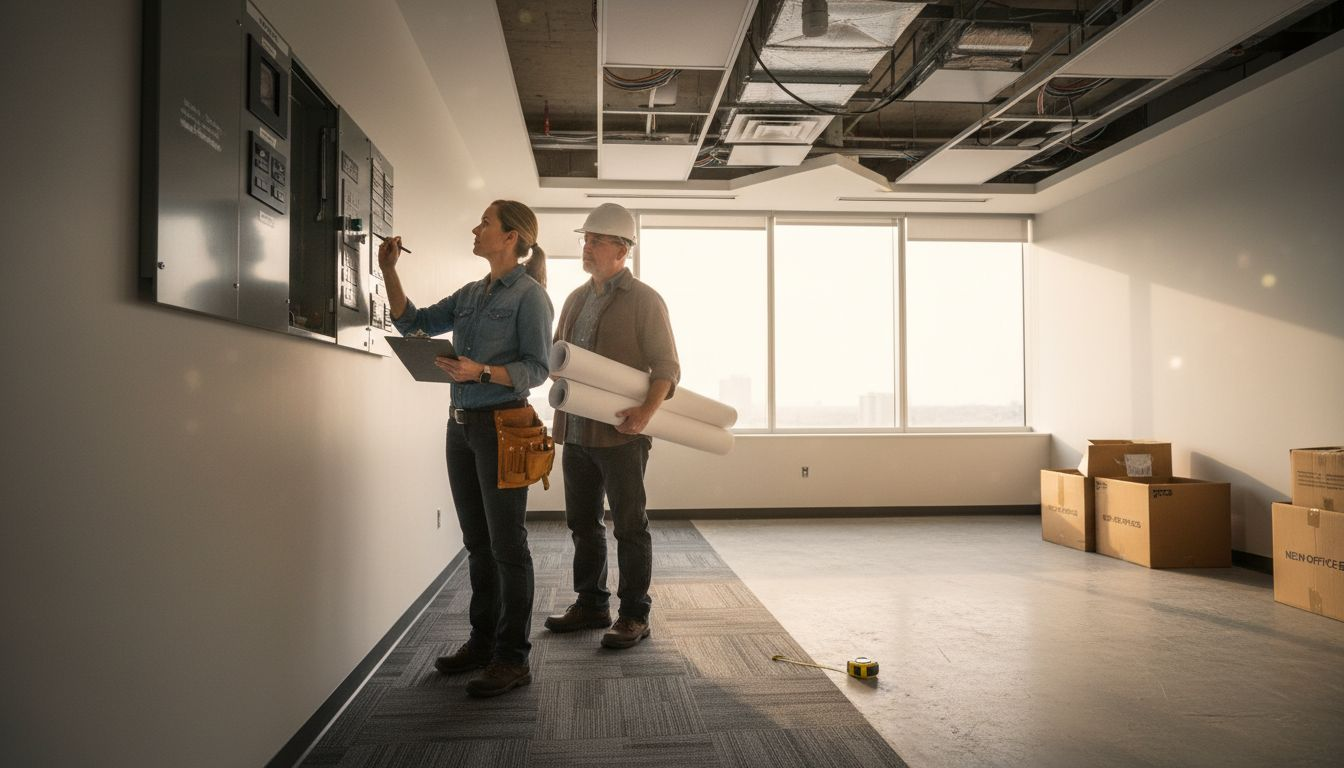
Acoustical engineering addresses sound transmission, reverberation control, and noise isolation in interior spaces. Conference rooms, open offices, healthcare facilities, and educational spaces each have unique acoustical requirements. Engineers specify sound-absorbing materials, design partition assemblies with appropriate Sound Transmission Class ratings, and coordinate mechanical system noise control. These technical decisions directly impact occupant productivity and satisfaction.
Fire safety systems require engineering expertise to integrate detection, suppression, and egress components with interior design elements. Engineers design sprinkler layouts that coordinate with lighting and ceiling systems, specify fire-rated materials for custom millwork, and calculate egress capacities for occupant loads. Sustainable interior projects with engineering input achieve LEED certification 15-20% more often because engineers apply green building principles throughout system design.
| Engineering Discipline | Interior Project Applications | Typical Deliverables |
| Structural | Load analysis for custom features, floor penetrations | Calculations, detail drawings |
| Mechanical | HVAC design, plumbing systems, controls integration | Equipment schedules, duct layouts |
| Electrical | Power distribution, lighting coordination, technology infrastructure | Panel schedules, circuit plans |
| Fire Protection | Sprinkler design, detection systems, egress analysis | Hydraulic calculations, device layouts |
Pro Tip: Involve engineers during schematic design rather than design development. Early collaboration prevents costly system redesigns when conflicts emerge between architectural features and building systems. Engineers can suggest alternative layouts that achieve design intent while optimizing system efficiency and reducing installation costs.
Risk management and integrated system design reduce project overruns by approximately 20% in large-scale interiors. Engineers identify potential conflicts between trades, sequence installation activities, and specify coordination requirements that prevent delays. Their technical input helps project teams avoid common pitfalls like undersized systems, code violations, and constructability issues that derail schedules and budgets.
Collaboration Between Engineers and Interior Designers
Joint planning and communication reduce rework while improving timeline adherence across all project phases. When engineers and interior designers meet regularly from project inception, they establish shared goals and identify potential conflicts before they escalate. These collaborative sessions allow designers to understand system constraints while engineers gain insight into aesthetic priorities. The result is integrated solutions that satisfy both functional requirements and design vision.
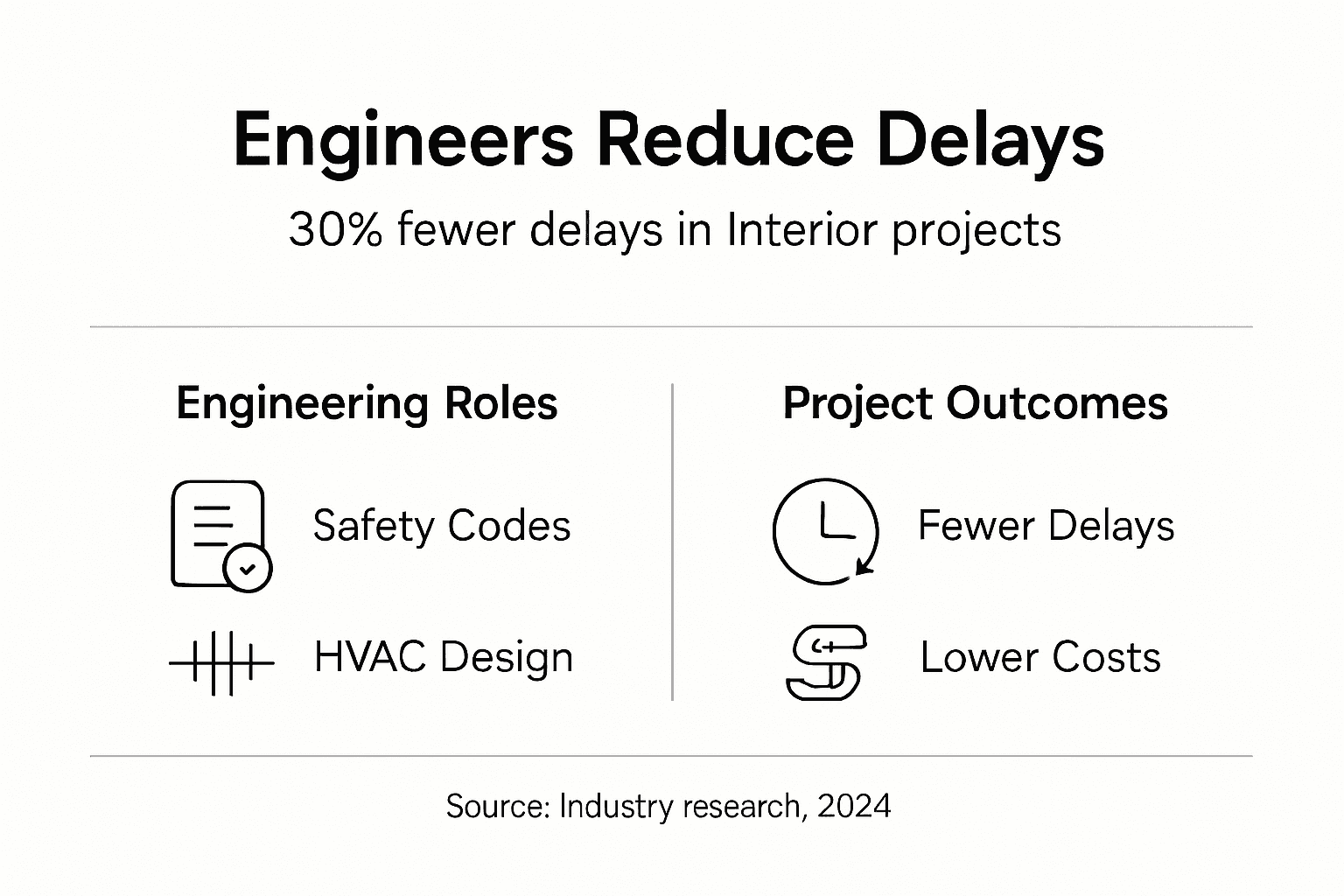
Certified collaborative professionals report 30% fewer delays and budget overruns compared to projects with siloed workflows. Certification programs teach structured communication protocols, conflict resolution strategies, and integrated project delivery methods. Engineers and designers who complete these programs develop common vocabularies and shared frameworks that streamline decision-making. They learn to balance competing priorities through data-driven discussions rather than positional negotiations.
Effective collaboration requires specific communication practices:
- Establish weekly coordination meetings during design phases
- Use Building Information Modeling to visualize system conflicts in 3D
- Maintain shared decision logs documenting design rationale and trade-offs
- Conduct constructability reviews before finalizing construction documents
- Schedule site visits together during construction to address field conditions
Accessibility compliance improves dramatically when engineers and designers collaborate on space planning and system integration. Engineers verify clearances around equipment, calculate maneuvering spaces for mobility devices, and ensure controls meet reach range requirements. Designers incorporate these constraints into layouts that maintain aesthetic cohesion. This partnership prevents code violations that could delay occupancy permits or trigger costly retrofits.
“Interdisciplinary collaboration transforms technical constraints into design opportunities, producing interior spaces that excel in both form and function.”
Pro Tip: Schedule interdisciplinary charettes at key project milestones such as concept approval, design development completion, and pre-construction. These intensive working sessions allow teams to resolve complex issues rapidly through face-to-face collaboration. Bringing all stakeholders together reduces email chains and accelerates consensus on critical decisions.
Continuing Education Requirements and Standards for Engineers
Most states require 15 to 30 Continuing Education Units annually or biennially for professional engineers to maintain licensure. These mandatory programs ensure engineers stay current with evolving building codes, emerging technologies, and best practices in their disciplines. State licensing boards specify approved course topics, delivery formats, and documentation requirements. Engineers must track completed courses and submit proof of compliance during license renewal periods.
Course content addresses critical competencies for interior project success:
- Updated building codes including International Building Code amendments and state-specific modifications
- Sustainability practices covering LEED requirements, energy modeling, and green material specifications
- Interdisciplinary collaboration techniques for integrated project delivery and design-build approaches
- Technology integration including building automation systems, smart building controls, and cybersecurity
- Risk management strategies for construction administration and professional liability mitigation
- Accessibility standards encompassing ADA requirements and universal design principles
Credentialed courses by professional organizations like the National Society of Professional Engineers and American Institute of Architects provide recognized continuing education credit. These programs undergo rigorous review to ensure content accuracy, relevance, and educational value. Engineers can access courses through online platforms, live webinars, in-person seminars, and conference sessions. The variety of delivery formats allows professionals to fulfill requirements while managing demanding project schedules.
Specialized continuing education prepares engineers for the unique challenges of interior projects. Courses on acoustical design teach engineers to specify materials and assemblies that control sound in open offices and healthcare facilities. Fire protection seminars cover sprinkler system coordination with architectural ceilings and specialty suppression systems for sensitive equipment. HVAC courses address ventilation strategies for high-density occupancies and variable refrigerant flow systems popular in tenant improvement projects.
Common Misconceptions About Engineers’ Roles
Many professionals incorrectly assume engineers only handle structural calculations and load-bearing modifications in interior projects. This narrow view overlooks engineering roles that expand across at least four critical interior systems beyond structure. Engineers design HVAC systems that maintain comfort and air quality, specify fire protection equipment that integrates with ceiling designs, solve acoustical challenges in shared spaces, and coordinate technology infrastructure for modern workplaces. Recognizing this breadth prevents teams from excluding engineers from discussions where their expertise could prevent problems.
Another common misunderstanding suggests continuing education represents a bureaucratic formality rather than a professional necessity. In reality, mandatory education keeps engineers competent in rapidly evolving technical fields. Building codes update on three-year cycles, introducing new requirements for energy efficiency, fire safety, and accessibility. Mechanical systems incorporate advanced controls and refrigerants that require specialized knowledge. Without ongoing education, engineers risk specifying outdated solutions or missing code requirements that could jeopardize project approvals.
Some teams believe engineers and designers work most efficiently in separate silos, connecting only when technical issues arise. This misconception produces fragmented designs that require expensive coordination during construction. Effective collaboration demands active communication from project inception through closeout. Engineers contribute valuable input during programming and schematic design when fundamental decisions about space use and system strategies occur. Early involvement allows engineers to suggest alternatives that achieve design goals while optimizing system performance and construction costs.
“Expanding awareness of engineers’ multifaceted contributions elevates project quality and strengthens interdisciplinary partnerships throughout the design and construction process.”
Misconceptions about cost often discourage early engineering involvement:
- Teams assume preliminary engineering fees exceed the value of early input
- Decision makers view engineering as a commodity service rather than strategic partnership
- Budget pressures tempt teams to defer engineering work until later design phases
- Procurement processes separate design and engineering into sequential contracts
These beliefs ignore research showing that early engineering collaboration reduces overall project costs by preventing rework, minimizing change orders, and optimizing system selections. The investment in upfront engineering coordination pays dividends through smoother construction and better long-term building performance.
Frameworks for Role Definition and Project Management
Defined roles reduce duplication, conflicts, and delays in complex interior projects involving multiple disciplines and stakeholders. Clear frameworks establish who makes decisions, who provides input, and who implements approved solutions. These structures prevent situations where team members duplicate efforts or assume others are handling critical tasks. Role clarity becomes especially important in fast-track projects where overlapping phases compress schedules and increase coordination demands.
Role clarity frameworks reduce project conflicts by up to 25% in multidisciplinary interior projects by establishing accountability and communication pathways. The RACI matrix, one widely adopted framework, assigns Responsible, Accountable, Consulted, and Informed roles for every project task. This simple tool clarifies expectations while highlighting potential bottlenecks where too many stakeholders hold decision authority. Teams use RACI charts during kickoff meetings to align on workflows before conflicts emerge.
| Framework Type | Primary Benefits | Best Applications |
| RACI Matrix | Clear task accountability, reduced confusion | Complex projects with multiple stakeholders |
| Integrated Project Delivery | Shared risk/reward, collaborative decision-making | High-performance buildings, tight schedules |
| Design-Build | Single point of responsibility, faster delivery | Tenant improvements, renovation projects |
| Traditional Design-Bid-Build | Clear phase separations, competitive bidding | Public projects, cost-certainty priorities |
Integrated frameworks connect engineering and design workflows for smoother decision-making throughout project lifecycles. Building Information Modeling platforms allow engineers and designers to work in shared digital environments where system conflicts become visible immediately. Clash detection tools identify interferences between architectural elements and building systems before construction begins. Regular model coordination meetings bring disciplines together to resolve conflicts through collaborative problem-solving rather than sequential markups.
Pro Tip: Use responsibility assignment matrices during project kickoff to clarify who owns each deliverable and decision point. Update the matrix as project scope evolves or team members change. Post the current version in shared project folders so all participants can reference role assignments when questions arise. This simple practice prevents assumptions and finger-pointing when issues emerge.
Risk management integration within role frameworks helps teams identify and mitigate threats to schedule, budget, and quality. Engineers contribute technical expertise to risk assessments, identifying potential constructability issues, long-lead equipment items, and code interpretation questions. Collaborative risk planning allows teams to develop contingency strategies before problems materialize. This proactive approach proves far more effective than reactive problem-solving during construction when options are limited and costs escalate.
Practical Applications: How Engineers Enhance Interior Project Outcomes
Case studies demonstrate how engineered solutions reduce safety risks while boosting LEED certification success rates in interior projects. A corporate headquarters renovation in Seattle achieved LEED Gold certification after engineers redesigned the HVAC system to incorporate demand-controlled ventilation and heat recovery. The engineering team worked closely with interior designers to integrate exposed ductwork as an aesthetic element, reducing ceiling costs while improving system efficiency. This collaboration produced a sustainable workspace that exceeded energy targets by 23%.
Healthcare facility upgrades showcase engineering contributions to infection control and patient safety. Engineers design negative pressure isolation rooms, specify medical gas systems, and coordinate nurse call technology with architectural layouts. In a recent hospital renovation, structural engineers enabled an open floor plan for a progressive care unit by designing steel moment frames that eliminated interior columns. The solution required complex calculations but delivered the flexible space clinicians needed for optimal patient visibility and workflow.
Impact metrics reveal that active engineering involvement reduces delays by 20 to 30% and prevents cost overruns across diverse project types. These improvements stem from several engineering contributions:
- Early identification of constructability issues that would delay field work
- Accurate system sizing that prevents change orders from undersized equipment
- Coordination drawings that sequence trades and minimize conflicts
- Value engineering suggestions that maintain performance while reducing costs
- Code compliance verification that prevents permit delays and inspection failures
Educational facility projects benefit from engineers who understand acoustical requirements, technology infrastructure needs, and flexible system designs. A university library renovation incorporated engineers during programming to assess existing structural capacity for new compact shelving systems. Engineers determined that floor reinforcement was unnecessary, saving $180,000 in structural modifications. They then designed a displacement ventilation system that reduced energy costs by 15% while improving indoor air quality in densely occupied study areas.
Engineers engaging early improve innovation and material use across projects by suggesting alternatives designers might not consider. Radiant heating and cooling systems, structural glass assemblies, and advanced lighting controls all require engineering expertise to implement successfully. When engineers join design teams during concept development, they can propose these systems as integrated solutions rather than attempting to retrofit them into completed designs. This early collaboration expands the palette of options available to design teams while ensuring technical feasibility.
Explore Ron Blank & Associates’ Engineering CE Courses
Navigating the complex intersection of engineering excellence and interior design requires partners who understand both disciplines deeply. Ron Blank & Associates offers continuing education for both engineers and interior designers.

Our continuing education programs prepare engineers and designers for effective collaboration on interior projects. Through AIA-registered courses covering code updates, sustainable design strategies, and interdisciplinary workflows, professionals gain the knowledge needed to deliver exceptional results. We also partner with building product manufacturers to help teams specify innovative materials and systems that enhance project outcomes while meeting performance requirements. Expert consultation ensures compliance, supports timely delivery, and controls budgets through proactive coordination and risk management.
FAQ
What are the primary technical duties of engineers in interior projects?
Engineers manage structural integrity verification, HVAC system design, acoustical performance, fire safety equipment, technology infrastructure, and sustainability compliance within interior spaces. This multifaceted role ensures occupant safety, functional performance, and adherence to building codes. Engineers coordinate these systems with architectural elements and interior finishes to create integrated solutions that support design intent while meeting technical requirements.
How does continuing education support engineers in managing interior projects?
Continuing education keeps engineers current with updated building codes, emerging technologies, sustainable design practices, and collaborative project delivery methods essential for interior project success. Most states legally mandate 15 to 30 continuing education units annually or biennially to maintain professional engineering licensure. These courses ensure engineers possess the knowledge needed to specify appropriate systems, coordinate with other disciplines, and deliver compliant designs.
What are effective strategies for engineers and interior designers to collaborate?
Establish joint planning meetings during project kickoff and maintain regular communication touchpoints throughout design and construction phases. Use Building Information Modeling platforms for visual coordination and implement role clarity frameworks like RACI matrices to define decision authority. Certified collaboration training programs teach communication protocols and conflict resolution strategies that reduce delays and improve outcomes across all project types.
Why do sustainable interior projects benefit from engineering involvement?
Engineers apply technical expertise in energy modeling, system optimization, and green building standards that increase LEED certification success rates by 15 to 20%. They design high-efficiency HVAC systems, specify sustainable materials, calculate daylighting strategies, and integrate renewable energy sources. Engineering analysis quantifies environmental impacts and validates that design decisions achieve sustainability targets while maintaining occupant comfort and system reliability.
How do role clarity frameworks reduce conflicts in interior projects?
Frameworks like RACI matrices and integrated project delivery protocols establish clear accountability for decisions and deliverables across multidisciplinary teams. These structures prevent duplicated efforts, communication gaps, and assumptions that lead to conflicts during design and construction. Research shows that defined roles reduce project conflicts by up to 25%, allowing teams to focus energy on solving technical challenges rather than resolving interpersonal disputes or clarifying responsibilities.