

Finding the right training hardly seems straightforward when professional schedules are packed and projects span every continent. Architects and engineers are searching for reliable ways to earn accredited credits while staying ahead with emerging materials and design practices. Webinar training now delivers flexible access to specialized knowledge, supporting continuous learning and global networking. This guide clarifies key webinar formats, credit tracking requirements, and innovative product integration for professionals committed to their ongoing development.
Table of Contents
- Defining Webinar Training For Design Professionals
- Webinar Formats For Continuing Education
- Earning And Tracking AIA And RCEP Credits
- Integrating Innovative Building Products In Training
- Key Challenges And Success Factors In Webinar Training
Key Takeaways
| Point | Details |
| Webinar Training is Essential | Webinar training offers design professionals flexible opportunities for continuing education, allowing them to stay updated on industry trends without geographical constraints. |
| Diverse Formats Increase Accessibility | Various webinar formats cater to different learning styles, ensuring professionals can integrate education into their schedules easily. |
| Credit Tracking is Vital | Understanding the requirements of AIA and RCEP credits is crucial for maintaining professional credentials and confirming compliance. |
| Focus on Innovative Materials | Training programs now emphasize sustainable building products, guiding professionals in making environmentally responsible material selections. |
Defining Webinar Training for Design Professionals
Webinar training has emerged as a critical professional development mechanism for architects, engineers, and design professionals seeking flexible continuing education opportunities. Unlike traditional in-person workshops, webinars provide remote learning environments that enable professionals to access specialized knowledge without geographical constraints.
These online training sessions typically involve structured digital presentations that combine visual content, expert lectures, and interactive elements designed specifically for design industry professionals. The key characteristics of effective webinar training include:
- Targeted content addressing current industry trends
- Interactive Q&A sessions with subject matter experts
- Flexible scheduling to accommodate professional workflows
- Measurable learning outcomes and continuing education credits
Design professionals benefit from webinar training through multiple dimensions of professional growth. Continuous learningbecomes more accessible, allowing architects and engineers to stay current with emerging technologies, regulatory changes, and innovative design methodologies. Moreover, these digital platforms facilitate knowledge exchange across geographical boundaries, creating unprecedented networking and collaborative opportunities.
Professional development through webinars goes beyond simple information transfer. These training sessions support ongoing professional learning by providing updated insights into evolving architectural practices, sustainable design principles, and technological advancements.
Pro tip: Always verify the continuing education credits offered by a webinar before registration to ensure they align with your professional certification requirements.
Webinar Formats for Continuing Education
Continuing education for design professionals has evolved significantly with the advent of diverse webinar delivery formats, offering unprecedented flexibility and engagement opportunities. These digital learning platforms have transformed how architects, engineers, and design professionals acquire and maintain their professional credentials.
Webinar formats can be categorized into several key types:
- Live Interactive Sessions: Real-time engagement with presenters
- Pre-recorded Webinars: Recorded content with live Q&A components
- Hybrid Learning Models: Combining synchronous and asynchronous learning elements
- On-Demand Courses: Self-paced modules accessible anytime
The most effective continuing education webinars incorporate multiple interactive elements to enhance learning outcomes. Online higher education platforms blend synchronous and asynchronous components to maximize accessibility and participant engagement. These formats typically include features such as live polling, breakout rooms, discussion forums, and comprehensive assessment tools.

Design professionals can benefit from these flexible formats by selecting webinar experiences that align with their specific learning preferences and professional development needs. The ability to choose between live, recorded, or hybrid learning models ensures that continuing education can be seamlessly integrated into busy professional schedules.
Here’s a summary of key webinar formats and how they fit different professional learning needs:
| Webinar Format | Best For | Interaction Level | Flexibility |
| Live Interactive Sessions | Real-time engagement | High | Fixed schedule |
| Pre-recorded | Tighter schedules | Moderate | Scheduled access |
| Hybrid Learning Models | Varied learning styles | High | Mix of fixed and on-demand |
| On-Demand Courses | Self-paced learners | Low to moderate | Anytime access |
Pro tip: Always review the specific continuing education credit requirements for your professional certification before selecting a webinar format to ensure full compliance.
Earning and Tracking AIA and RCEP Credits
Navigating the continuing education requirements for architects and engineers involves understanding the complex landscape of professional credentialing through the American Institute of Architects (AIA) and the Registered Continuing Education Program (RCEP). These organizations establish rigorous standards for professional development that ensure design professionals remain current with industry innovations, technological advancements, and evolving regulatory frameworks.
Credit Tracking Mechanisms typically involve several key components:
- Online Learning Platforms: Centralized systems for recording and managing continuing education credits
- Self-Reporting Portals: Personal dashboards where professionals log completed courses
- Automated Credit Verification: Digital systems that automatically validate and record educational activities
- Annual Reporting Requirements: Structured submission processes for maintaining professional credentials
Professionals must carefully document their continuing education activities, paying close attention to specific requirements for each certification type. AIA Credits are typically earned through approved learning experiences that demonstrate direct relevance to architectural practice, including technical seminars, professional development courses, and industry conferences.
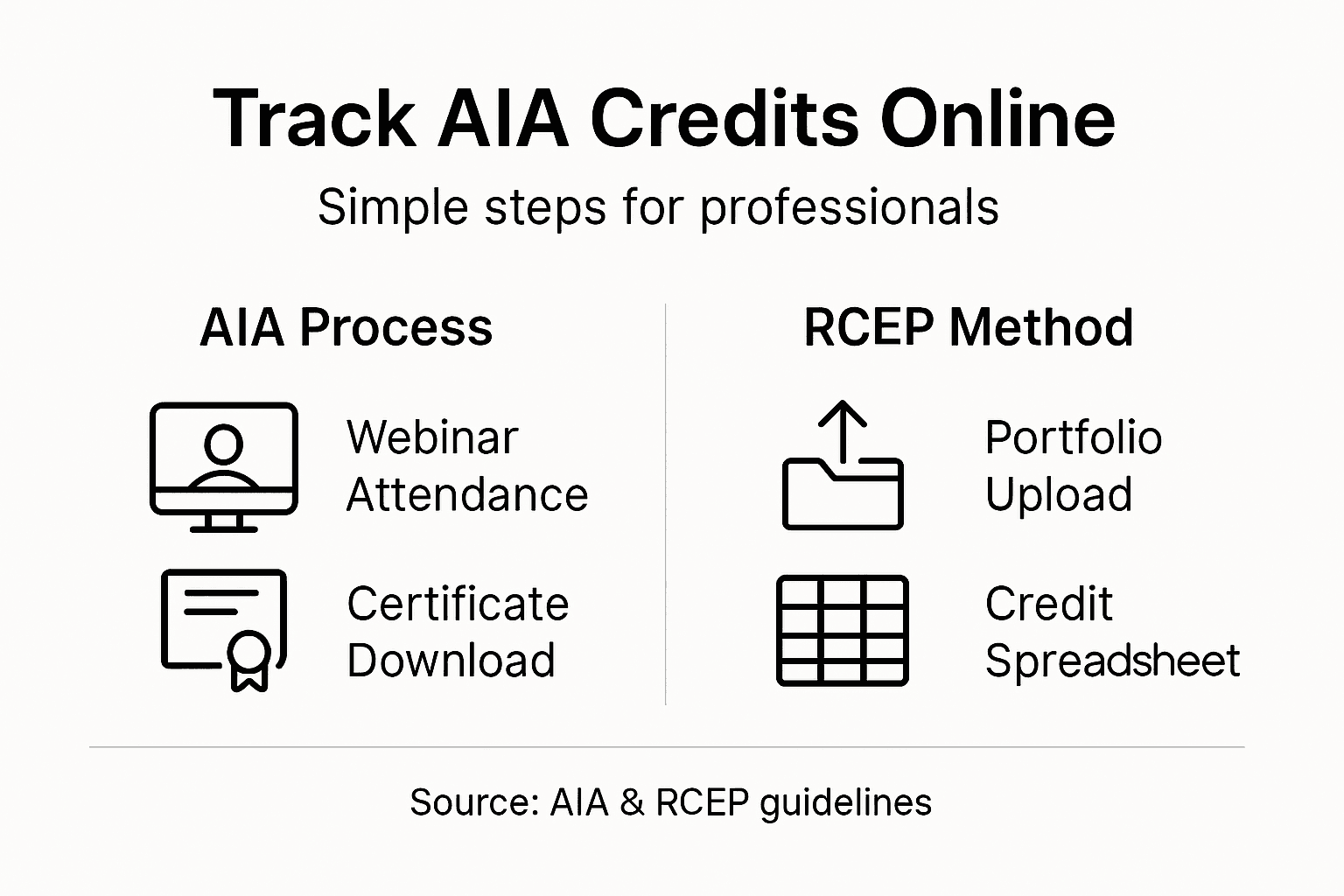
The Registered Continuing Education Program (RCEP) provides a standardized framework for tracking professional development across engineering disciplines. Design professionals must maintain meticulous records of their educational activities, ensuring they meet the precise number of credit hours required for license renewal and professional standing.
This table contrasts AIA and RCEP credit tracking requirements for design professionals:
| Aspect | AIA System | RCEP System |
| Target Audience | Architects | Engineers, surveyors, others |
| Verification Method | Approved providers, audits | Self-reporting, periodic review |
| Renewal Cycle | Typically annual | Varies by jurisdiction |
| Accepted Activities | Seminars, courses, conferences | Courses, workshops, technical work |
Pro tip: Maintain a digital portfolio of your continuing education certificates and create a spreadsheet tracking your credit hours to simplify annual reporting and credential maintenance.
Integrating Innovative Building Products in Training
Modern architectural education is increasingly focusing on sustainable building product innovation, transforming how design professionals approach material selection and environmental responsibility. This shift represents a critical evolution in professional training, emphasizing materials that not only meet technical specifications but also contribute to broader sustainability goals.
Key innovative building products being integrated into training include:
- Engineered Wood Products: Sustainable alternatives to traditional construction materials
- Recycled Aggregates: Environmentally conscious concrete and infrastructure solutions
- Bio-based Materials: Renewable resources with reduced carbon footprints
- High-Performance Composites: Advanced materials with superior durability and efficiency
Training programs now require professionals to understand complex material characteristics beyond traditional performance metrics. Sustainable Design Principles have become central to curriculum development, ensuring architects and engineers can critically evaluate building products based on environmental impact, lifecycle assessment, and long-term sustainability potential.
The integration of innovative building products into professional training involves comprehensive approaches that combine theoretical knowledge with practical application. Design professionals must develop sophisticated skills in assessing material properties, understanding regulatory requirements, and implementing sustainable construction practices that align with evolving industry standards.
Pro tip: Attend manufacturer workshops and technical seminars to gain hands-on experience with cutting-edge building materials and their practical applications.
Key Challenges and Success Factors in Webinar Training
Webinar training for design professionals presents a complex landscape of challenges and strategic opportunities, requiring sophisticated approaches to ensure meaningful learning experiences. The transition from traditional classroom settings to digital platforms demands innovative strategies that address both technological and pedagogical considerations.
Key challenges in webinar training include:
- Technical Connectivity Issues: Unstable internet connections and platform compatibility
- Participant Engagement: Maintaining attention in a virtual environment
- Interactive Learning Limitations: Reduced non-verbal communication
- Digital Literacy Variability: Uneven technological proficiency among participants
Success Factors for effective webinar training revolve around creating dynamic, interactive learning experiences. Skilled facilitators must implement strategic approaches that compensate for the inherent limitations of digital platforms, such as utilizing real-time polling, breakout rooms, and collaborative digital tools to simulate in-person engagement.
The most effective webinars leverage personalized learning approaches that address individual participant needs while maintaining a structured, professional development framework. This requires careful instructional design that balances technical content delivery with opportunities for meaningful interaction and knowledge application.
Pro tip: Conduct a brief technical orientation at the start of each webinar to ensure all participants can fully engage with the interactive features and minimize disruptions.
Elevate Your Professional Growth with Expert Webinar Training
If you find navigating the complexities of earning AIA credits online challenging, you are not alone. The article highlights key pain points such as finding flexible continuing education that fits your busy schedule, ensuring your courses offer legitimate credits, and staying engaged with evolving architectural practices through interactive webinars. At the core, architects and design professionals seek reliable, accessible learning solutions that keep them current with industry standards and regulatory requirements.
Our platform at Ron Blank and Associates directly addresses these needs by offering a comprehensive range of continuing education courses registered with the American Institute of Architects. We specialize in delivering engaging online webinars, podcasts, and face-to-face courses designed for busy professionals craving flexible schedules, interactive learning experiences, and verified credit accreditation. Additionally, we partner with building product manufacturers to integrate innovative, sustainable building materials education, helping you stay ahead in sustainable design and specification.
Unlock your potential today with trusted courses that offer measurable continuing education credit hours and practical knowledge you can apply immediately.
Discover the difference with Ron Blank and Associates, your partner in certified professional development.

Start earning your AIA credits online with confidence and convenience. Visit Ron Blank and Associates now and take the next step toward seamless continuing education. Explore our continuing education courses and elevate your architectural practice with cutting-edge knowledge and certified training.
Frequently Asked Questions
How do I earn AIA credits through webinar training?
To earn AIA credits through webinar training, you must participate in approved learning experiences that are directly relevant to architectural practice. Make sure the webinars you attend provide AIA-approved continuing education credits.
What types of activities qualify for AIA continuing education credits?
Qualifying activities for AIA continuing education credits include attending technical seminars, professional development courses, and industry conferences that provide relevant knowledge and skills applicable to architecture.
Can I track my AIA credits online?
Yes, you can track your AIA credits through online learning platforms, which offer centralized systems for recording and managing your continuing education activities. These platforms often include automated credit verification features.
What should I consider before registering for a webinar to earn AIA credits?
Before registering for a webinar, verify that it offers the appropriate continuing education credits for your AIA certification. Review the content relevancy, the credentials of the presenter, and whether the format allows for interactive engagement.