

Every civil engineer faces mounting pressure to stay technically sharp and professionally compliant. As industry demands shift and regulations evolve, choosing the right professional development courses is more than an obligation—it is a smart career strategy. By focusing on competence-based teaching strategies, engineers can confidently meet RCEP requirements, boost their expertise, and navigate the ever-changing engineering landscape.
Table of Contents
- Courses for Engineers: Core Purpose and Value
- Types of Courses and Delivery Methods Explained
- Staying Ahead: Technology and Regulatory Changes
- Meeting RCEP and Professional Credit Needs
- Real-World Impact: Skills, Careers, Compliance
Key Takeaways
| Point | Details |
| Professional Engineering Courses Enhance Skills | These courses focus on bridging theoretical knowledge with practical applications essential for modern engineering challenges. |
| Diverse Learning Methods Available | Engineers can choose from various delivery formats, including on-demand courses and live webinars, to fit their learning needs. |
| Stay Updated on Technology Trends | Embracing emerging technologies and regulatory changes is crucial for remaining competitive in the engineering field. |
| Continuous Professional Development is Key | Engaging in ongoing education and documenting progress is vital for career advancement and compliance with industry standards. |
Courses for Engineers: Core Purpose and Value
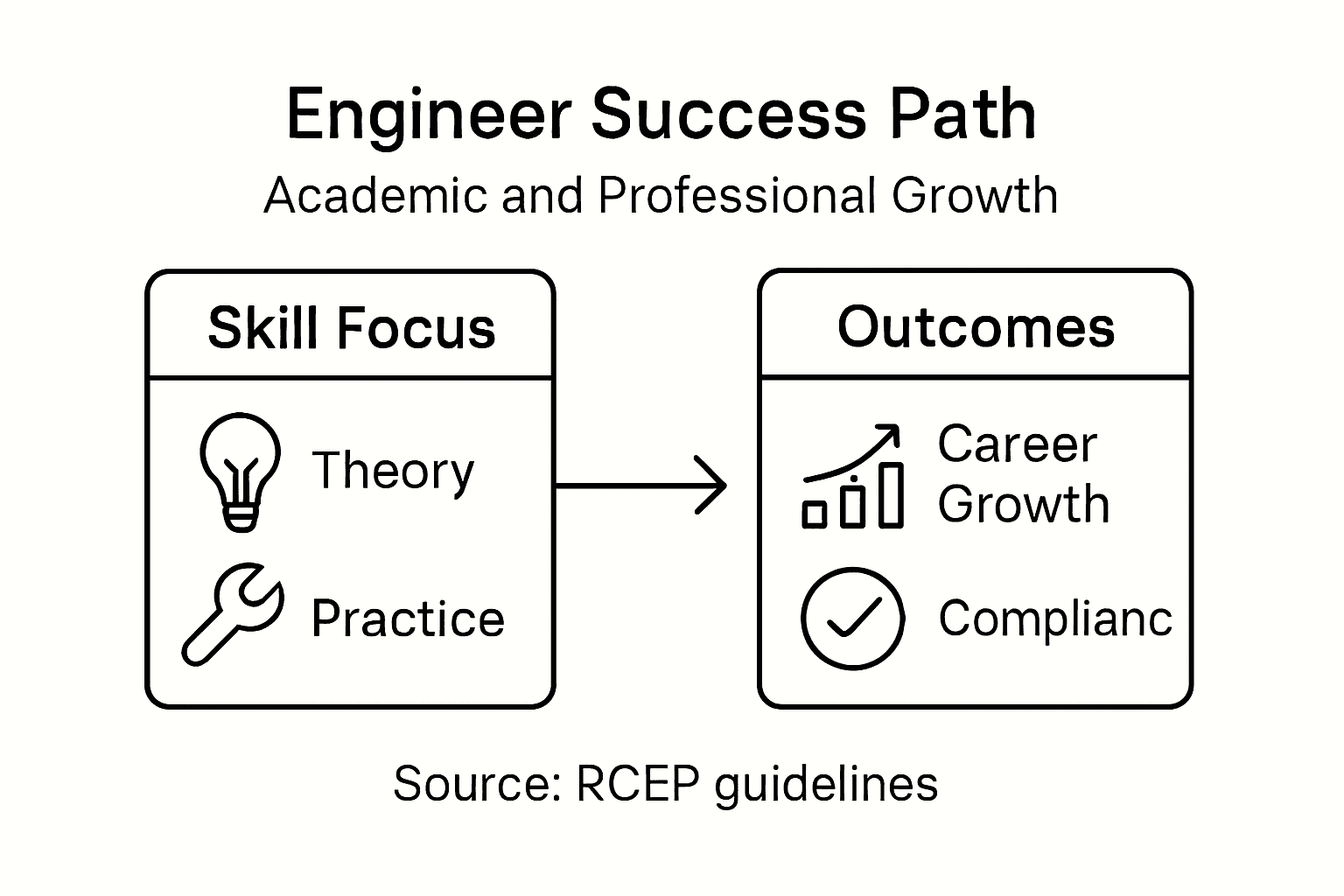
Engineering education represents far more than traditional classroom learning. It’s a strategic pathway designed to transform technical professionals by equipping them with dynamic skills essential for modern technological challenges. The core purpose of professional engineering courses extends well beyond academic theory, focusing on bridging theoretical knowledge with practical industry requirements.
The landscape of engineering education has dramatically evolved, emphasizing a comprehensive approach to skill development. Competence-based teaching strategies now prioritize practical application and real-world problem-solving. This shift reflects the industry’s growing demand for engineers who can seamlessly translate academic concepts into innovative solutions.
Key objectives of professional engineering courses include:
- Developing advanced technical competencies
- Enhancing critical thinking and analytical skills
- Providing exposure to emerging technological trends
- Building professional communication capabilities
- Ensuring compliance with current industry standards
Modern engineering education recognizes the dual nature of professional development. Academic rigor and professional practice must work in tandem to produce well-rounded engineering professionals capable of addressing complex societal challenges. This approach transforms engineers from mere technical experts into strategic problem solvers who understand both scientific principles and practical implementation.
Pro tip: Continuously update your skills through targeted professional development courses to remain competitive in the rapidly evolving engineering landscape.
Types of Courses and Delivery Methods Explained
Professional engineering education has transformed dramatically, offering engineers unprecedented flexibility in skill development and learning approaches. Engineering course varieties now span multiple disciplines and delivery formats, catering to diverse professional needs and learning preferences across different career stages.
Engineering disciplines encompass a wide range of specialized fields, each with unique course structures and learning objectives:
- Mechanical Engineering: Focus on machine design, thermal systems, and manufacturing processes
- Electrical Engineering: Emphasizing electronics, power systems, and telecommunications
- Civil Engineering: Concentrating on infrastructure, structural design, and environmental systems
Alternative course delivery methods have revolutionized professional development. Engineers can now choose from multiple learning platforms that accommodate different schedules and learning styles. These methods include live webinars, on-demand courses, hybrid models, and traditional classroom training, enabling professionals to acquire knowledge without disrupting their current work commitments.
Pro tip: Select engineering courses that offer practical, industry-relevant content and align with your specific career development goals.
Here is a comparison of common engineering course delivery methods and their unique benefits:
| Delivery Method | Flexibility | Typical Interaction Level | Best For |
| On-Demand Online | High | Low | Busy professionals, self-paced |
| Live Webinar | Moderate | Medium | Real-time Q&A, remote learners |
| Hybrid (Blended) | Moderate-High | High | Hands-on & theory integration |
| Traditional Classroom | Low | Very High | Group work, face-to-face learning |
Staying Ahead: Technology and Regulatory Changes
Engineering professionals must proactively navigate the rapidly evolving technological landscape to remain competitive and relevant. Digital transformation in engineering demands continuous learning and adaptability, challenging engineers to embrace emerging technologies and regulatory shifts with strategic precision.
Key technological trends reshaping engineering education and practice include:
- Artificial Intelligence (AI) integration in design and problem-solving
- Virtual Reality (VR) simulation technologies
- Remote collaboration platforms
- Sustainable technology development
Technological innovation strategies are fundamentally transforming how engineers learn, work, and solve complex challenges. These innovations extend beyond traditional technological boundaries, incorporating psychopedagogical approaches that enhance learning effectiveness while addressing cognitive accessibility and engagement.

Regulatory compliance has become increasingly complex, requiring engineers to develop sophisticated understanding of emerging standards across multiple domains. Successful professionals must cultivate a proactive approach to continuous learning, anticipating technological shifts and maintaining flexibility in their skill sets.
Pro tip: Dedicate at least 10% of your professional development time to studying emerging technologies and regulatory trends in your specific engineering discipline.
This table summarizes how emerging technological trends impact engineering practice and education:
| Technology Trend | Core Impact | Required Adaptations |
| Artificial Intelligence | Speeds up design processes | Develop AI literacy |
| Virtual Reality | Enhances simulation accuracy | Learn VR tool utilization |
| Remote Collaboration | Enables global teamwork | Build online project skills |
| Sustainable Tech | Drives eco-friendly design | Master green engineering methods |
| Cybersecurity | Protects digital assets | Gain cybersecurity competencies |
Meeting RCEP and Professional Credit Needs
Professional engineers must strategically navigate the complex landscape of continuing education credits to maintain their licensure and professional standing. Registered Continuing Education Provider (RCEP) credentials represent a critical pathway for engineers to demonstrate ongoing professional development and compliance with industry standards.
Key considerations for meeting professional credit requirements include:
- Tracking total continuing education units (CEUs)
- Understanding specific state licensing board requirements
- Selecting accredited course providers
- Documenting completed professional development activities
- Maintaining accurate personal learning records
The professional credit ecosystem involves multiple interconnected components that engineers must carefully manage. Professional licensing boards typically require:
- Minimum annual continuing education hours
- Courses from approved/accredited providers
- Documentation of completed educational activities
- Periodic renewal of professional credentials
Successful navigation of RCEP requirements demands proactive planning and systematic approach to professional development. Engineers must remain vigilant about evolving regulatory standards and seek out high-quality educational opportunities that not only fulfill credit requirements but also enhance their technical expertise.
Pro tip: Create a dedicated digital folder to systematically track and archive all professional development certificates and continuing education documentation.
Real-World Impact: Skills, Careers, Compliance
Engineering professionals navigate a complex landscape where continuous learning directly translates into career advancement and professional relevance. Collaboration between academia and industry has become critical in preparing engineers for real-world challenges, bridging theoretical knowledge with practical application.
Key dimensions of professional development include:
- Technical skill enhancement
- Regulatory compliance management
- Career trajectory optimization
- Industry-relevant competency development
- Professional networking opportunities
Professional development strategies demonstrate that ongoing learning is not merely a requirement but a strategic career investment. Engineers who proactively engage in continuous education position themselves as adaptable, innovative professionals capable of navigating technological disruptions and complex industry challenges.
The intersection of skills, careers, and compliance creates a dynamic ecosystem where professional growth is measured by one’s ability to integrate technical expertise, regulatory understanding, and practical problem-solving capabilities. Successful engineers recognize that their value extends beyond technical knowledge, encompassing adaptability, continuous learning, and strategic professional development.
Pro tip: Develop a personalized learning roadmap that aligns your professional development activities with both your current job requirements and future career aspirations.
Elevate Your Engineering Career with Targeted Continuing Education
The article highlights the critical need for engineers to stay ahead through continuous learning that meets Registered Continuing Education Provider (RCEP) standards and adapts to evolving technologies and regulatory demands. Many engineers face challenges such as balancing work with education, tracking professional credits efficiently, and ensuring their skills remain relevant in a rapidly changing environment. It is essential to engage with courses that not only fulfill professional credit requirements but also build practical skills and industry insight.
At Ron Blank and Associates, we understand the pressure engineers face to maintain licensure and grow professionally. Our expertly developed online courses, webinars, and face-to-face sessions are registered with leading professional organizations such as the American Institute of Architects to ensure your education counts toward your continuing education units. Whether you want to master emerging trends like AI integration or sustainable design, our flexible course delivery options fit seamlessly into your busy schedule.
Explore our continuing education courses designed specifically for engineers who demand quality, compliance, and real-world impact. Learn more about our online courses and webinars and take control of your professional growth today. Discover how our courses support your RCEP success and keep your engineering skills sharp for tomorrow’s challenges.

Don’t let professional development become a burden. Start transforming your career now with educational programs that deliver both knowledge and continuing education credits efficiently. Visit Ron Blank and take the next step to secure your engineering future.
Frequently Asked Questions
What is the core purpose of engineering courses?
The core purpose of engineering courses is to bridge theoretical knowledge with practical industry requirements, focusing on skill development essential for modern technological challenges.
How do professional engineering courses support career advancement?
Professional engineering courses enhance technical competencies, critical thinking, and compliance with industry standards, which are vital for career growth and remaining competitive in the field.
What delivery methods are available for engineering education?
Engineering education offers various delivery methods, including on-demand online courses, live webinars, hybrid models, and traditional classroom training, catering to different learning preferences.
Why is continuous learning important for engineers?
Continuous learning is crucial for engineers to stay updated with emerging technologies and regulatory changes, ensuring they remain competitive and effective in addressing complex industry challenges.